RV Carrier Comparison: Space-Efficient Comfort Picks
10th Dec•7 min read
Your pet doesn't vomit in the carrier because they're defiant or dramatic (they're experiencing a genuine neurological conflict). Vestibular system pet carrier science reveals that motion sickness in carriers isn't a behavioral problem; it's a sensory one. Understanding this distinction transforms how you design your pet's travel experience and, more importantly, how you prepare them for it.
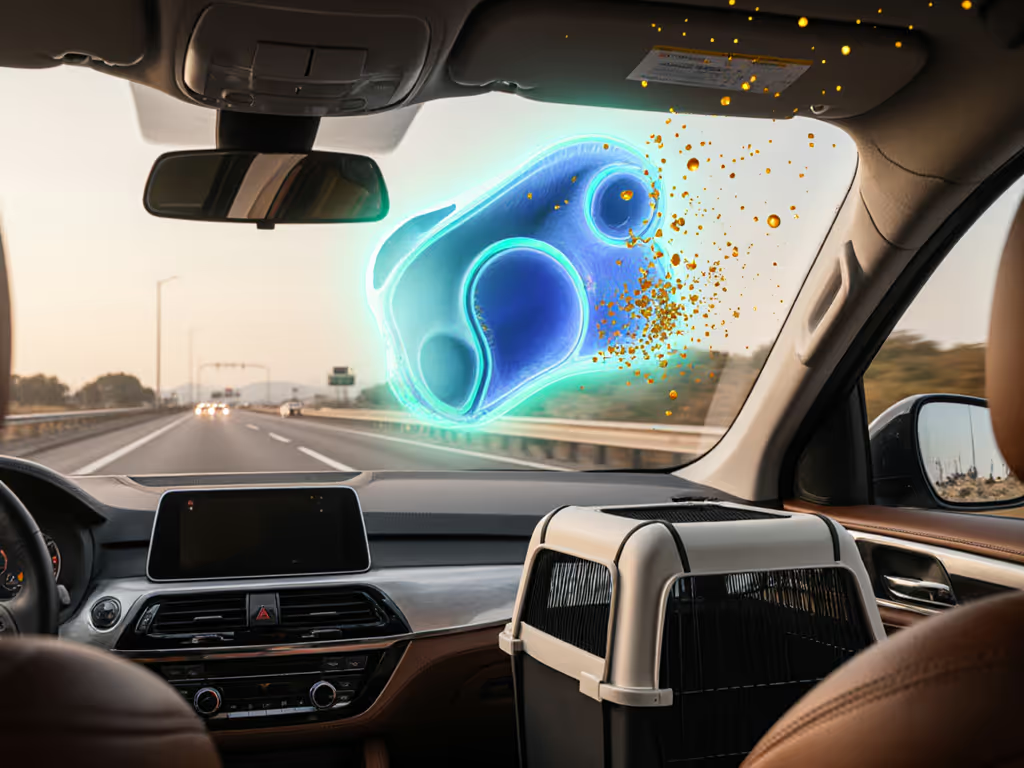
Deep inside your pet's ear lies the vestibular system, a collection of fluid-filled tubes and sensory organs that detect motion, balance, and spatial orientation. When your pet moves through space (whether in a car, train, or plane) this system constantly sends signals to the brain about acceleration, deceleration, and directional changes.
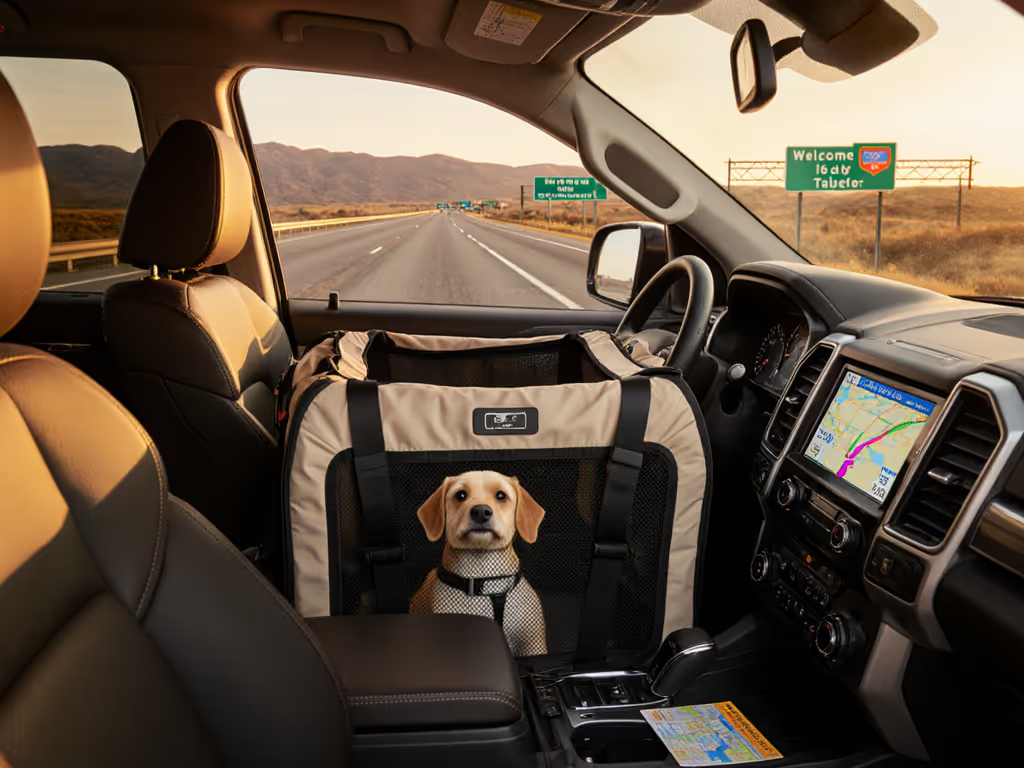
In normal movement, your pet can integrate these signals with visual information. A dog hanging their nose out a car window isn't just enjoying the breeze; they're anchoring their vestibular input with what they see. Their eyes confirm the motion their inner ear detects, creating neurological harmony.
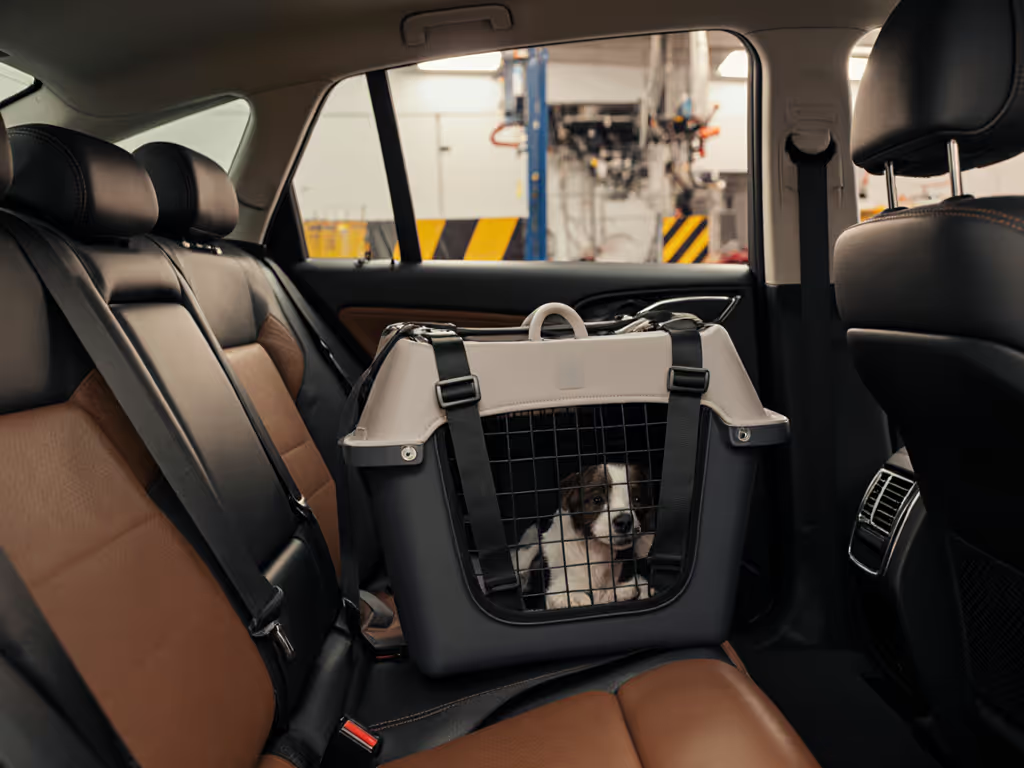
A confined carrier disrupts this harmony. Your pet senses motion (acceleration as the car starts, turns, sudden stops) but cannot see movement to match those signals. The brain receives contradictory messages: "I'm moving," says the vestibular system. "I'm not," says the limited visual field of a carrier's interior. This conflict is what triggers nausea, panting, drooling, and sometimes vomiting. For car-specific setup and safety steps that also reduce vestibular stress, see our vehicle carrier safety checklist.

Most carriers are designed for static containment, not for the sensory reality of travel. A motion sickness carrier design requires rethinking several common features.
Height restrictions force pets into cramped postures. A cat curled unnaturally in a carrier can't shift weight to compensate for vehicle motion. A dog unable to raise their head experiences more disorientation, their vestibular system has fewer reference points.
Opaque walls and limited sightlines eliminate visual anchors. Your pet's brain amplifies the vestibular conflict when the eyes have nothing to confirm or deny the motion signals.
Rigid enclosures transmit vibration directly. Every jolt, lane change, and speed bump travels unmediated to your pet's body, overwhelming their balance organs with excessive input.
Poor ventilation increases anxiety, which itself triggers motion sickness. A stressed pet breathes rapidly, hyperventilates, and their vestibular system becomes more sensitive to motion.
These design flaws don't cause anxiety first: anxiety is the secondary reaction to vestibular overwhelm. To understand how airflow and mesh placement change motion tolerance, read our pet carrier ventilation science guide.
I once worked with a shepherd whose panic at the sight of her soft carrier seemed behavioral. We started not with the carrier itself, but with its components. The carrier base, detached and placed on her bed during dinner, became neutral furniture. We built micro-sessions: five minutes with the fabric frame nearby, then ten minutes with the door panel leaning beside it. Within weeks, she walked toward it on cue. We introduced motion through a rolling stool beneath the carrier, then a slow walk through the house. By the time we added the vehicle, her brain had already learned: this container is safe, and motion is manageable within it.
What changed? We separated two systems. Her anxiety about the container itself dissolved once familiarity removed the novelty. Her vestibular sensitivity improved through graduated exposure to motion while her arousal remained low. Calm begins long before you zip the door.
The reverse is also true: a pet thrown unprepared into a moving car in a carrier they've never acclimated to will become anxious because their vestibular system is overwhelmed. Trainers often blame "carrier anxiety," but what they're seeing is motion sickness followed by learned anxiety: the pet now dreads the carrier because it predicts vestibular chaos.
Reducing vestibular conflict requires three carrier-level changes:
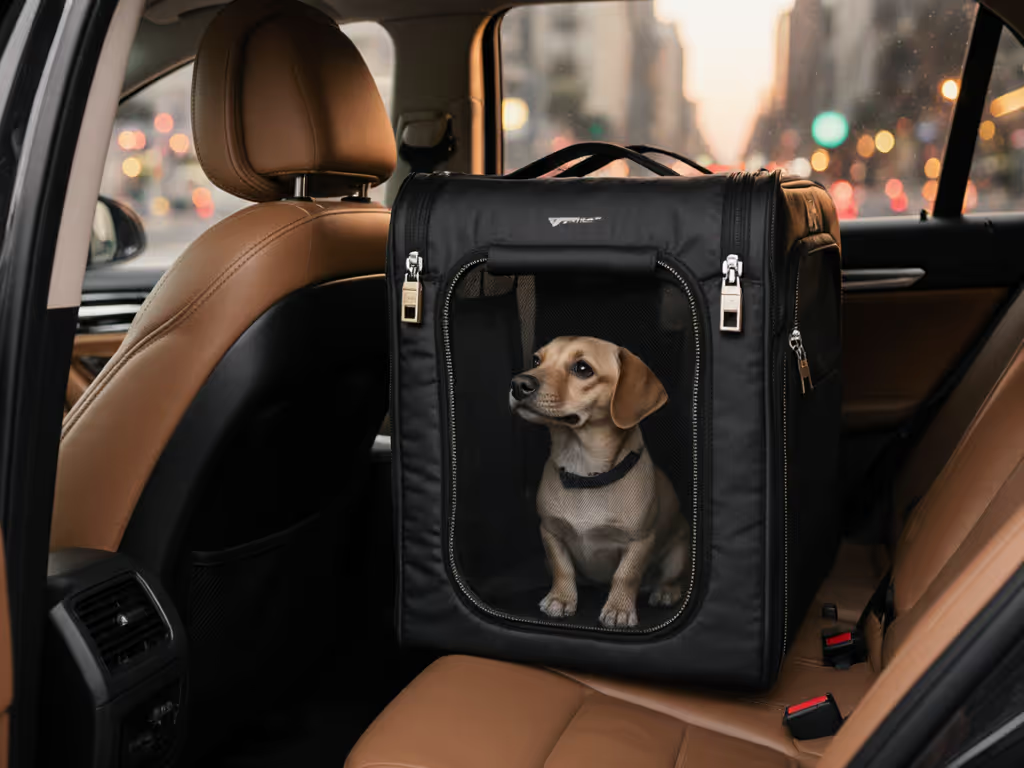
Increase interior height and width. Pets need room to shift posture: to stand, crouch, sphinx, or turn. These postural changes are how they naturally compensate for motion. A taller carrier allows a dog to lower or raise their head, helping their vestibular system calibrate to acceleration.
Optimize sightlines strategically. A carrier with one semi-transparent or mesh wall lets your pet see forward motion, anchoring vestibular input to visual reality. Conversely, privacy panels on the sides and back reduce disorienting peripheral motion without total blindness. This balance (controlled visibility) mimics what happens when a dog relaxes with their head slightly out a window, not pressed against it.
Dampen vibration transmission. Padding, memory foam liners, and suspension systems absorb micro-vibrations before they reach your pet's body. The vestibular organs are exquisitely sensitive; even small reductions in vibration noise significantly lower overstimulation.
Prioritize ventilation and microclimate control. A cool, well-aired carrier keeps your pet's nervous system calm, which naturally makes the vestibular system less reactive. Heat and poor air quality amplify motion sickness severity.
Carrier design alone cannot solve motion sickness without behavioral preparation. A carrier should lower arousal, not contain it by force (this principle shapes every step of acclimation). For a step-by-step foundation, start with our carrier introduction guide to build positive associations before adding motion.
Week 1-2: Stationary familiarization
Week 3-4: Short motion exposure
Week 5-6: Vehicle acclimatization
Week 7+: Graduated complexity
This timeline prevents the shepherd-at-the-carrier panic cycle. Your pet's brain learns that motion is survivable before stress hormones spike.
Motion sickness is not a trait your pet must endure. By understanding that vestibular system balance travel depends on both carrier engineering and patient acclimation, you can transform carriers from ordeal triggers into managed refuges. The steps are gradual, measurable, and rooted in how your pet's brain actually processes motion.
Start this week: place your empty carrier somewhere your pet spends calm time. Observe their curiosity without pressure. That small act of patience is where all lasting change begins.