
Hot Yoga Pet Carrier Comparison: Heat & Odor Tested
2nd May•8 min read
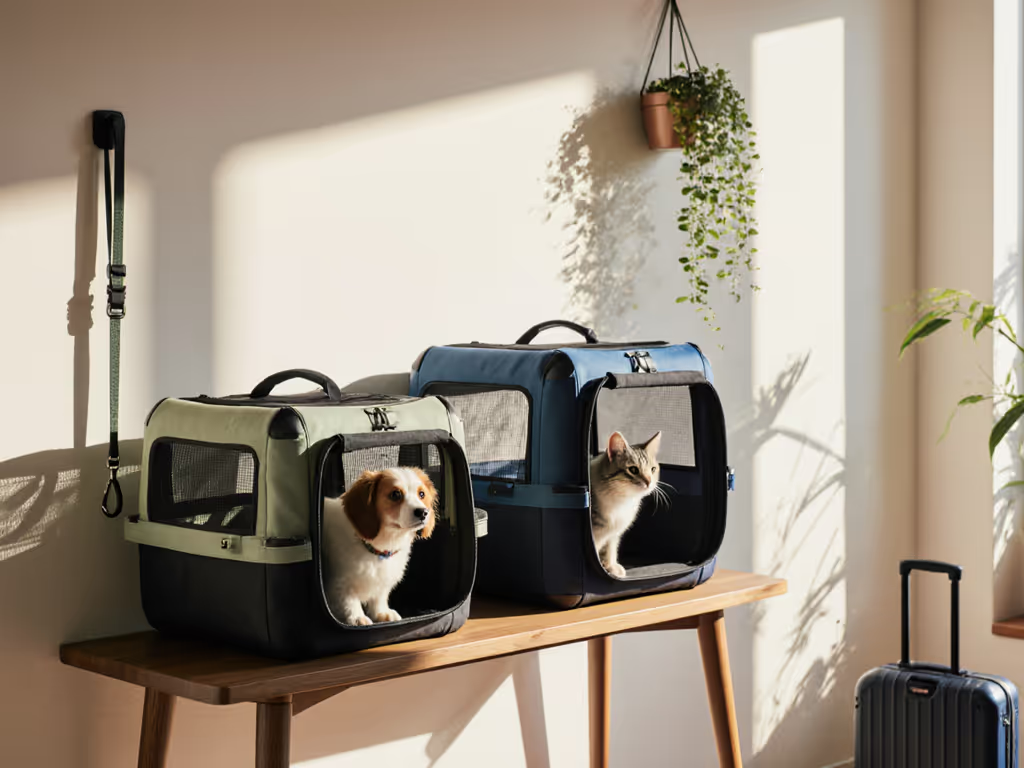
When you're traveling with two pets of different sizes (say, a 12-pound tabby and a 7-pound terrier mix), a tandem pet carrier comparison reveals a truth most shoppers miss: one carrier doesn't fit all dynamics. A large travel pet carrier designed for split loads demands different thinking than single-pet models. The goal isn't just to fit both animals; it's to distribute their weight and behavioral needs so that you, the human, stay upright and everyone stays calm.
I learned this the hard way on a crowded commuter train when I tried cramming my increasingly anxious cat and foster dog into an oversized single-chamber bag. Twenty minutes in, my shoulders screamed. Thirty minutes in, the cat was panting. The problem wasn't the carrier's size, it was my failure to match compartmentalization, strap placement, and load balance to the actual animals inside. Switching to a structured dual-compartment pet carrier with load lifters and a hip belt transformed what felt like a liability into a manageable commute. If public transit is part of your routine, review our subway pet carrier compliance guide.
This guide walks you through the real metrics, trade-offs, and fitment checks that separate carriers that look spacious from carriers that feel manageable over hours.
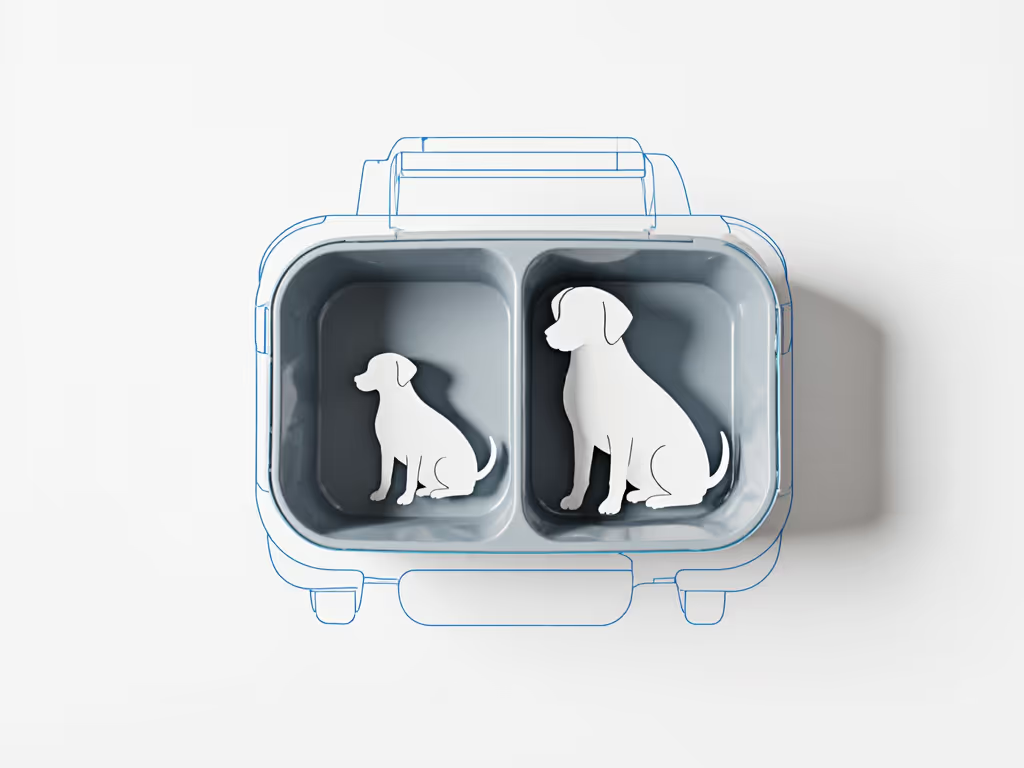
A dual compartment pet carrier isn't just two bags sewn together. The best designs separate pets into independent zones, each with its own entrance, ventilation, and escape prevention. This serves three critical functions:
When compartments are rigid and well-padded, the carrier also doubles as a home den between trips (a feature that builds carrier affinity and reduces gate anxiety).
For different-size pet travel, the material choice shapes what is actually possible. For a deeper breakdown of build types, see our soft vs hard carrier comparison.
Soft-sided carriers (polyester or canvas with steel frames):
Hard-sided carriers (plastic shells with metal doors and ventilation ports):
For tandem loads with mixed sizes, soft-sided carriers with a sturdy steel or aluminum frame outperform both extremes. You get collapsibility without sacrifice.
Most pain points stem from one mistake: measuring the carrier, not the pet. Here's what actually matters.
For each animal, measure three ways:
Write these down. Then, for each compartment of the carrier, check the usable interior dimensions, not the shell size. A 24" carrier often has only 22" of internal space once padding and frames are factored in.
The posture test: Pets in carriers will curl, sphinx (stretch out low), or sit upright depending on stress and confinement comfort. Your 12-pound cat may stretch to 20" nose-to-rump when anxious. A compartment that's 20" long is barely functional and will panic-spike her cortisol. Aim for 3-4" of buffer room in length and 2-3" in height.
Consider three variables:
This is why I choose structured frames and hip belts even if they add weight. Comfort is capacity you actually use for miles.
Your pets may need to fit under an airplane seat, but they also ride the subway or hail a rideshare. The carrier has to compress without collapse and fit standard overhead bins.
Best match: A soft-sided, collapsible large pet travel carrier with a fold-down frame and removable wheels. Examples include carriers built with 600-denier polyester, steel corner brackets, and a base that can go rigid when needed. When compartments are semi-independent (a shared base but separate chambers), you get modularity: remove one partition for a single larger pet on return trips.
Load distribution: Aim for a 4-point padded shoulder strap system. This distributes force across your shoulders and chest rather than pinching at two neck points. A hip belt is non-negotiable if either pet exceeds 8 lb.
Test checkpoint: Can you walk three flights of stairs without your hands tingling? If yes, the strap geometry works. If your trapezius is tight or your fingers are numb by stair three, the carrier's too heavy or the suspension is too narrow. Return it.
Cars offer more space and the option for larger, less compressible carriers. Before your next road trip, run through our car crash-tested carrier safety checklist. The trade-off: hard-sided carriers with full ventilation are heavier and harder to manage at rest stops or vet clinics.
Best match: A dual-compartment soft-sided carrier with a rigid steel frame and mesh panels on all four sides. Weight distribution matters less when the carrier sits stationary in a car, but ventilation becomes critical. Pets can overheat quickly in parked cars; mesh-on-all-sides means air circulation even if the AC cycles off.
Feature priorities: Look for carriers with internal D-rings or velcro patches so you can lash the carrier to a rear seat belt, preventing slide-and-tumble during braking. Some carriers include adjustable dividers, so you can create asymmetrical compartments if one pet needs more space.
Test checkpoint: Test the stairs, not just the parking lot. Load the carrier in your car, then unload and carry it 100 feet to a vet clinic entrance. Can you manage it one-handed while your partner opens the door? If not, it's a liability on return visits when you're alone.
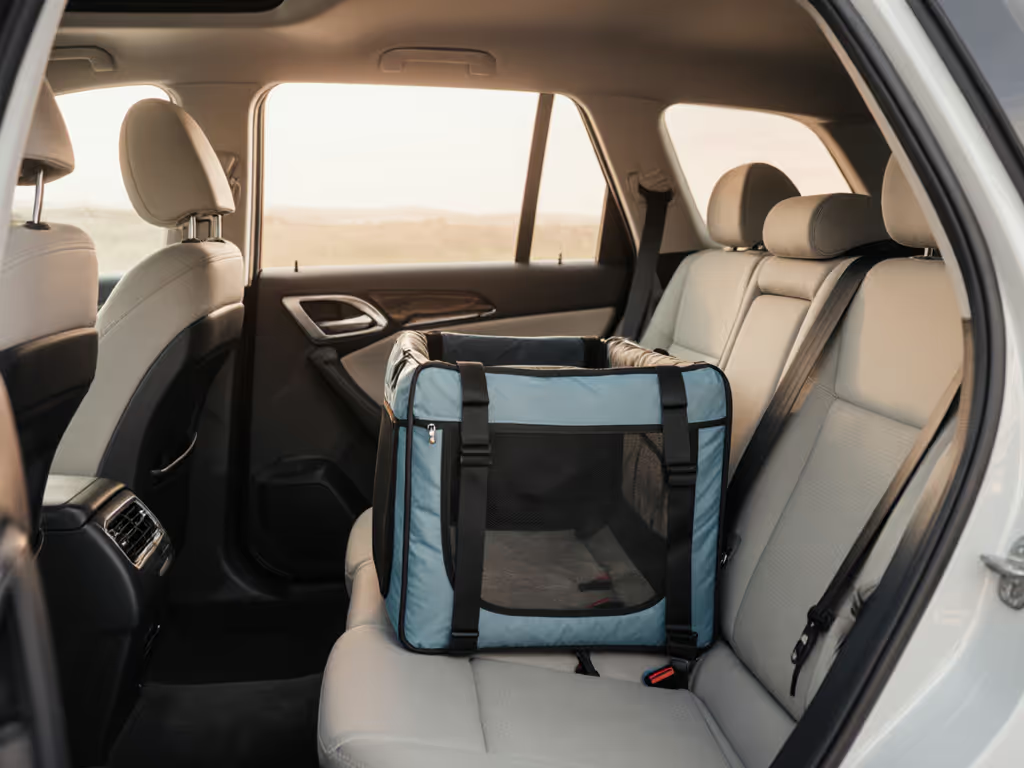
Top-load design: Ideal for cats or small dogs that resist front-door entry. Pinching zippers on top reduce the pet's ability to brace against gravity on the way in. However, top-load carriers are harder to manage in crowded terminals (backpacks can't handle top-heavy weight). Verdict: best for car and home; less ideal for all-day travel.
Front-door + side-access design: Allows you to open one door fully while keeping the pet in the compartment, then coax them out slowly. Particularly useful during vet exams, your vet can reach in without lifting the pet through a narrow top. Some carriers (like those designed for dual-cat scenarios) include zippering side panels that convert to full openness. This is a game-changer for anxious animals.
Top + front combination: The sweet spot for mixed-size scenarios. Your cat comes in via top; your small dog enters from the front. Both doors can be opened without compromising the other compartment.
Mesh panels on all sides seem ideal, but they're a liability for anxious or motion-sick pets. Animals that can see too much often hyperventilate; those that can't see outside sometimes vocalize out of disorientation.
Best compromise: Mesh on three sides, a solid or blackout-paneled side (often the back or top). This gives the pet an "escape corner" (a visual safe zone to retreat to) while maintaining airflow.
For cars, full mesh works if the vehicle temperature is stable and windows are cracked. For air travel, solid panels on two sides are non-negotiable; cabin air recycles poorly, and a pet pressed against cold metal hull is a hypothermia risk.
The difference between a carrier you can use and one you'll avoid comes down to shoulder geometry.
Single-strap shoulder carriers: Marketed as convenient, these concentrate load on one trapezius. After 10 minutes, you'll feel the pull. After 30, numbness sets in. Avoid entirely.
Two-strap backpack style: Standard for most soft-sided carriers. Weight distributes across both shoulders but is still concentrated at the trapezius. Works for pets under 15 lb total; beyond that, fatigue accelerates.
Four-point harness + hip belt: This is the architecture that changed everything for me. Two main shoulder straps attach high on your chest, two load-lifter straps angle down from the carrier's top, and a waist belt rides on your hip crests (not your lumbar spine). Your pelvis absorbs 40-50% of the load; your shoulders absorb the rest, spread wide. Carriers with this system feel 2-3 lb lighter in practice.
Removable wheels (with velcro base): If your pets are on the smaller end of the mixed-size range and you expect to roll the carrier through airports, wheels that detach before cabin entry are the elegant compromise. You wheel to the gate, remove the base (takes 20 seconds), and tuck it in an overhead bin. Your pet gains 3-4" of under-seat real estate, and you avoid the awkward shuffle of trying to squeeze a wheeled carrier under a 9" seat height. This approach is especially practical if you're flying multiple times per year.
You're flying a cat (11 lb, 18" long) and a small rescue dog (8 lb, 14" long) cross-country. Here's the decision tree.
Carrier dimensions:
Solution options:
Two single carriers (one per pet): 18x9x10 each, side-by-side under the seat. Pro: each animal gets privacy, no territorial stress. Con: double the luggage space, double the purchasing cost, and you'll struggle to fit both under one seat (seats are typically 17" wide). Verdict: only viable if you're checking one pet.
One larger soft-sided dual carrier (20x12x11, collapsible): Exceeds cabin dimensions but compresses to 18x11x9 when weight is distributed and gentle pressure is applied. This works if the divider between compartments is removable (so you can angle it). Pro: one item to track, lower cost, and you gain modular use for future trips. Con: requires that you test the compression at home before your trip, and it depends on the carrier's fabric strain rating. Some cheap carriers pop back out when the pet moves.
Removable-wheel carrier: 20x12x11 with detachable wheels via velcro tabs. When wheels are off, the base is rigid and the overall height drops to 10". Fits the diagonal of the space better than straight-in orientation. This is the safest bet if the wheels are truly removable (not snapped-on; velcro peels cleanly without tearing fabric).
My recommendation: Option 3. You keep the wheels for terminals (hours of walking), they're gone before cabin entry, and the carrier becomes a permanent travel workhorse. The $30-50 premium for a removable-wheel system pays for itself in peace of mind and durability.
Load-balance detail: The cat compartment should be on the left (your stronger side if you're right-handed) because you'll access her more during the flight (water, reassurance). The dog compartment on the right, slightly lower, so weight vectors balance around your hip belt. When loading the carrier before the gate, put the dog in first (lower stress from longer cabin time), then the cat (will settle faster in a half-empty carrier).
A tandem carrier takes double the wear of a single-pet model. Seams fail first. Look for carriers using ballistic nylon or high-denier polyester (600 denier minimum) with bonded seams (stitched and sealed, not just stitched). If the product page doesn't specify denier or seam type, assume it's bargain-grade and will split within a year if you travel monthly.
Mesh panels should be nylon ripstop or polycarbonate (not thin polyester mesh, which snags and tears under pet claws). Zippers must be YKK or comparable industrial grade, not cheap nylon spirals that jam and separate.
Corner brackets should be aluminum or steel, not plastic. Plastic cracks under the compression of dual compartment loads. Any buckle or release mechanism should be rated for 100+ lb of pressure; if it's flimsy and light, it will give way during airport security screening or a rough baggage cart bump.
Accidents happen. A carrier with a removable, machine-washable base liner is worth the premium. For step-by-step cleaning methods that prevent lingering odors, follow our deep clean pet carrier guide. Carriers with glued-in padding are a nightmare when your pet gets carsick or anxious-voids. Ensure the base has a moisture barrier (waterproof layer beneath the fabric liner) so liquid doesn't seep into the frame or insulation.
Before you buy, and before your trip, work through this:
A tandem pet carrier comparison comes down to honest answers to three questions:
First: Do your pets actually need separate compartments? If they're bonded and calm together, a single large carrier is lighter and cheaper. If they stress each other, or if their size difference creates handling problems (a 12 lb cat pinning a 7 lb dog), compartments are essential.
Second: How many modes of travel will this carrier see? One-time trip? A single soft-sided carrier will do. Monthly flights, plus car travel, plus public transit commutes? Invest in a removable-wheel, compressible design that adapts to all three. The cost premium ($80-150 more than a basic carrier) is recouped in avoided returns, stress-related re-purchases, and the fact that you'll actually use it.
Third: Can you carry it comfortably? This is the hard truth many skip. A carrier on your shoulders isn't luxury; it's the difference between a manageable commute and one you'll dread. If it causes pain, you'll delay vet visits or avoid travel altogether. If it fits your frame with a hip belt, load lifters, and proper strap geometry, you'll handle monthly flights and multi-hour car trips without injury. Comfort is a safety feature, for you and your pet.
For most large travel pet carrier scenarios with mixed-size pets, a soft-sided, collapsible dual compartment pet carrier with removable wheels, a 4-point harness, a hip belt, and removable, washable liners strikes the best balance between weight, compliance, durability, and real-world usability. It'll cost $120-180 upfront, but it earns that price through years of reliable travel and the peace of mind that comes from knowing the rules and the fit. Test it at home, test the stairs, not just the parking lot, and you'll know before you're at the gate whether you've made the right call.