PetSafe Happy Ride Review: Tested for Car Safety
6th May•15 min read
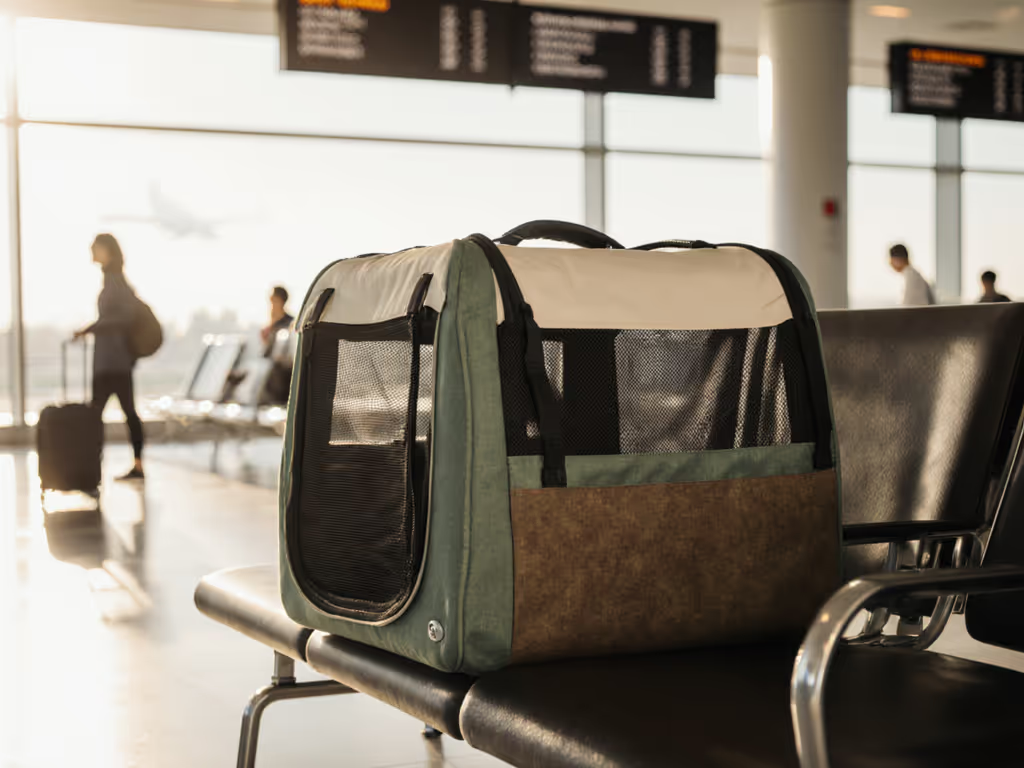
The allure of an eco-friendly pet carrier is straightforward: lower environmental impact, sustainable materials, modern design. For a broader overview of sustainable options and what 'green' really means, see our eco-friendly pet carriers guide. What's less straightforward is whether that recycled fabric or biodegradable shell will pass the gate sizer when your airline's ground crew runs the check. This Pet Lovers Only Eco Carrier review dives past marketing claims into the verification zone, where sustainable pet carrier performance meets real-world compliance enforcement, measurement standards, and the unglamorous truth about trade-offs.
For frequent-traveling pet parents, the stakes are high. Compliance failures mean gate checks, denied boarding, last-minute rewrites to travel plans, or costly shipping-pet-separately workarounds. Eco-conscious shoppers face an additional layer of skepticism: Do sustainable materials actually hold up under repeated use, airline handling, and the unpredictable stresses of multi-mode travel? Do they meet hard dimension limits and weight tolerances that enforcement officers use?
Traditional hard-shell carriers have dominated compliance discussions for decades because their rigid geometry is predictable. For a side-by-side breakdown of strengths and trade-offs, see soft vs hard pet carriers. Insert a carrier into an airline's metal sizer frame (a rectangular template representing the aircraft's under-seat or overhead constraints), and there is little ambiguity. Soft-sided or flexible eco carriers complicate that binary.
Many eco-friendly carriers use recycled plastics, organic cotton blends, or innovative biodegradable composites. These materials can meet durability standards, but they introduce variability: compression under pressure, seam strain from repeated loading cycles, and potential frame distortion over time. The critical question is not whether the carrier fits the sizer when new; it is whether it remains compliant after 20, 50, or 100 trips.
Airlines cite specific policies. For instance, major U.S. carriers (American, Delta, United) define in-cabin pet carrier dimensions as approximately 16 × 12 × 8.5 inches (length × width × height), though specifications vary by aircraft type and cabin position. European carriers often use similar thresholds aligned with IATA (International Air Transport Association) Pet Safe container guidelines. If you're flying internationally, compare IATA-compliant carrier rules across regions. None of these standards explicitly differentiate between materials; compliance is measurement-driven, not material-driven.
Yet material does matter. A 16-inch eco-fabric carrier that compresses to 15.8 inches under hand pressure passes the sizer. The same carrier after 50 trips, with softened corner support and stretched seams, might measure 16.4 inches, and fail.
Here's where precision replaces hope. Most pet owners rely on product tags and marketing dimensions. Use our airline-approved specs checklist to measure correctly and avoid gate denials.