Pet Lovers Only Eco Carrier: Compliance Verified
8th Apr•3 min read
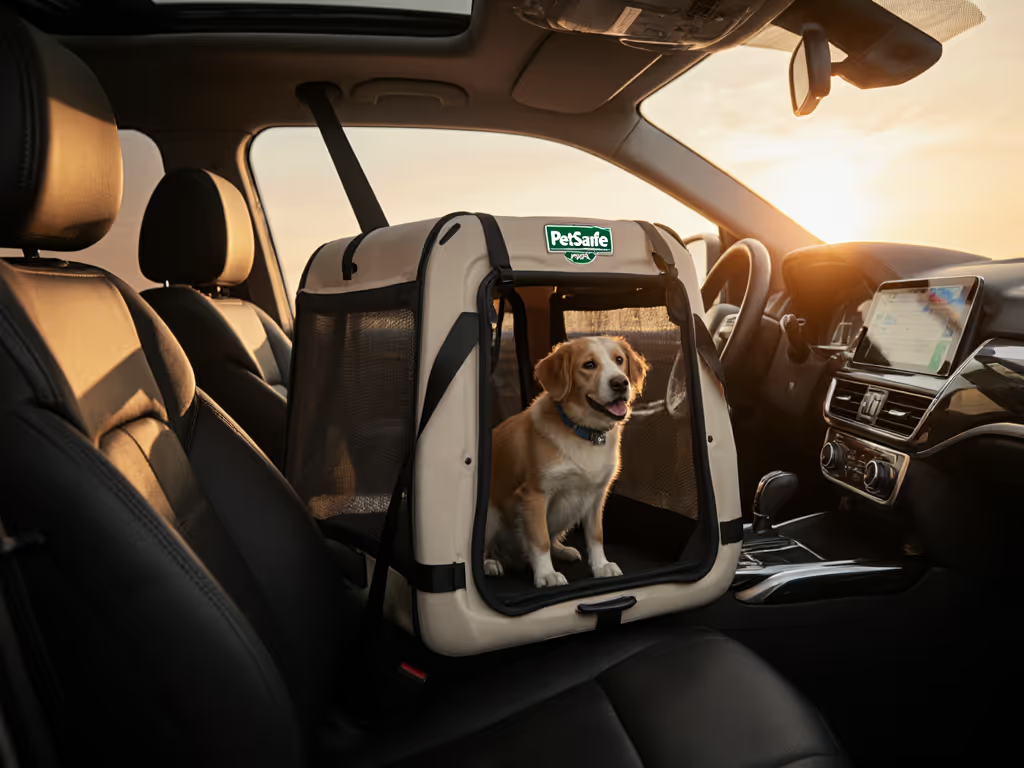
When you're shopping for a travel pet carrier or PetSafe Happy Ride review online, the product photos look promising: reinforced seams, cheerful colors, claims of portability and washability. But as someone who has spent years mapping under-seat geometries and tracking enforcement at departure gates, I've learned that marketing dimensions and real-world compliance are not always the same thing. The PetSafe Happy Ride line (which includes a collapsible travel crate, a car seat cover, and a cargo liner) offers genuine utility for pet owners who move their companions frequently. But critical assessment matters, because a carrier that looks good at home can create stress, confrontation, or worse, gate denial if it doesn't align with the actual rules you'll face.
In this review, I'll measure the Happy Ride products against the standards that matter most: airline under-seat compliance, car safety integration, real-world enforcement patterns, and the hidden gaps that often catch travelers off guard. My focus is on whether these products reduce friction or simply defer the problem to your next trip.
Before diving into product specifics, let me establish the foundation that governs every recommendation I make. Pet carriers fail in the field for one core reason: mismatch between what a tag says and what a space actually allows. Years ago, at JFK, I watched a family's carrier (which had passed every airline's published dimension on their website) snag on the metal frame under the seat. The gate agent pulled out the sizer (a metal box that mimics hold space), and the game was over. We'd brought a backup low-profile model that I'd tested against that airline's publicly filed under-seat diagrams. No confrontation. No gate check. No hours of unexpected pet separation.
That moment crystallized my practice: measure the cabin, not just the carrier's tag.
Accurate sizing starts with your pet, not the carrier.
Key measurements you must take:
Most pet owners skip this step and guess. For precise under-seat fit across airlines, follow our airline measurement checklist. Then they arrive at the airport with a carrier that the pet can't stand in upright, or one so large it doesn't fit under the seat. The difference between a failed gate check and smooth boarding often comes down to 1-2 inches.
The PetSafe Happy Ride brand offers three main products in the travel and transport space:
This is a foldable plastic-framed crate with mesh panels. According to product documentation and user reviews, it collapses flat for storage and suits pets up to around 20-25 lb (depending on breed and build). It's designed as a portable containment solution for cars, hotel rooms, and home use.
Advertised advantages:
Immediate compliance concern: This crate is not airline cabin-approved for in-cabin travel on most carriers. Hard-sided crates larger than 22 × 14 × 9 inches rarely comply with under-seat dimensions. PetSafe's Happy Ride crates are designed for car and home containment, not TSA-approved cabin transport. If you're flying with your pet, this product alone won't solve your problem.
A waterproof, machine-washable cover that fits over passenger or back-seat bucket seats. It anchors via attachment points and creates a contained zone for your pet.
Advertised specs:
Car safety assessment: This product is a protection layer, not a restraint. It does not meet crash-safety standards on its own. In a sudden stop or accident, an unrestrained pet in or on a seat cover becomes a projectile. Use our car crash-tested carrier checklist to choose restraints that meet recognized standards. If car safety is part of your travel profile, you'll need additional hardware: a seat-belt harness, a hard-sided crash-tested crate, or a vehicle barrier. The Happy Ride seat cover is complementary, not primary.
A waterproof mat sized for SUV cargo areas (70 inches long × 50 inches wide). Designed to protect the truck bed from accidents and mess.
Advertised specs:
Cargo use case: This liner is ideal for road trips where your pet rides loose in a fully enclosed cargo area and you don't need airline compliance. For urban multi-mode travel (car + airport + rideshare), it's limited; you still need an actual carrier for security and pet containment outside the vehicle.
Let me apply the measurement-first framework to the core pain point: Will these products pass airline enforcement?
Most North American and European airlines enforce TSA-level under-seat dimensions: Get the full breakdown of what airlines actually require in our airline-approved specs guide.
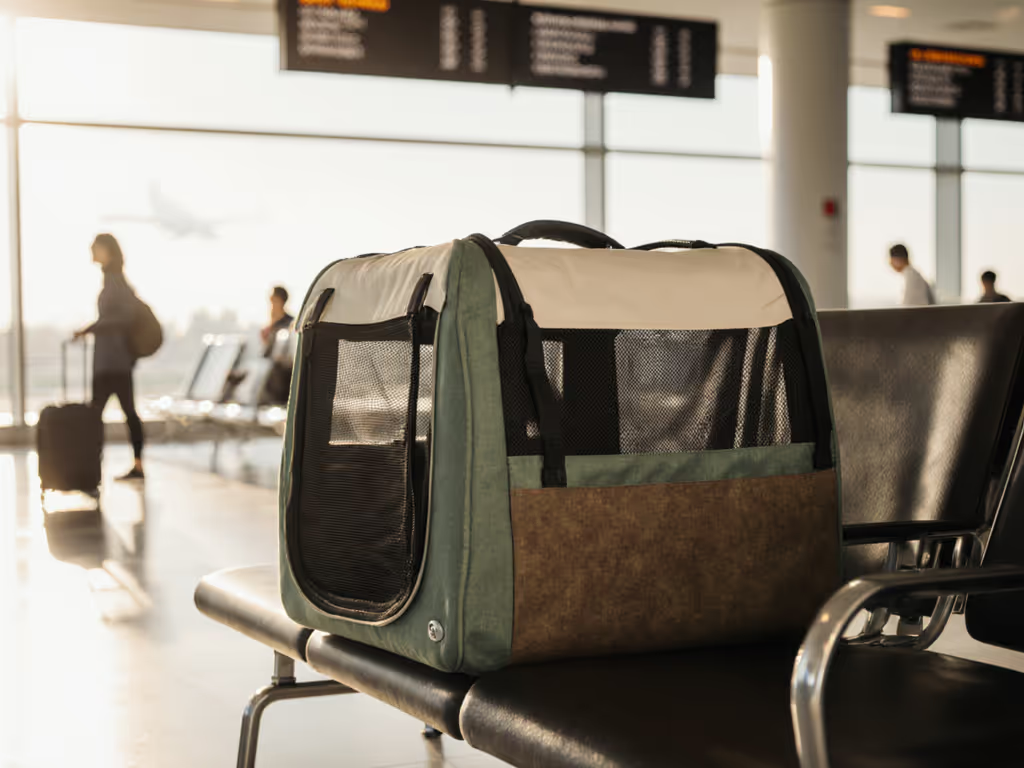
The collapsible travel crate: When fully assembled, this product measures approximately 24-27 inches long, 17-20 inches wide, and 20-24 inches tall (varies by model). Even compressed, it does not fit under-seat. PetSafe markets it as a "travel crate," but travel in this context means car and hotel, not cabin flight.
The seat cover and cargo liner: These are not carriers. They don't house a pet for cabin transport. They're car-specific and don't address the airline question at all.
The verdict on air travel: If in-cabin flight is part of your routine, the Happy Ride line requires supplementation with a separate soft-sided cabin carrier (typically under $40-60 and sized to 22 × 14 × 9 inches). This means dual investment or at trip time swapping.
This is where the critical analysis becomes essential. The audience pain point here is real: Should I prioritize crash-tested car cages or airline-compliant cabin carriers?
PetSafe's product line assumes you're making a car-centric choice. If you drive your pet often and fly rarely, that's rational. But if you fly 2-4 times annually and drive weekly, you need a carrier that handles both contexts.
Car scenario: The collapsible crate + cargo liner combo provides containment and mess protection. Your pet is secured. The seat cover protects upholstery. Cost: ~$90-120 total. This is a practical car solution.
Flight scenario: You'd need to purchase or borrow a separate under-seat-compliant soft-sided carrier (not included). Re-measurement required. Familiarization with the pet in the new carrier takes time. Cost: +$50-100 more. Risk: time crunch, pet stress in an unfamiliar carrier.
Rideshare/public transit scenario: The collapsible crate is too large for Uber Pet or most subway rules. Before you book, check our ride-share compliant carrier guide to avoid last-minute cancellations. The seat cover is car-specific. The cargo liner is useless. You'd again need a compact cabin-compliant carrier.
The honest trade-off: PetSafe's Happy Ride is optimized for car owners who don't frequently fly or use multi-mode transit. For the audience described in this review (millennial and Gen X pet parents who blend driving, air travel, and rideshare), it's only a partial solution.
The collapsible crate uses mesh panels. This is good for airflow but poses a risk for chewers and escape artists. If your pet has a history of anxiety-driven gnawing or has learned to pop mesh, this crate will likely fail. Mesh is also a noise conductor; anxious panting or whining travels clearly, which can disturb co-passengers on flights (if you somehow managed to fit it in-cabin, which you won't). See which designs best reduce sound in our noise-reduction carrier guide.
These products use buckles and anchor straps, not zippers. This is a durability win. Velcro closure systems are common on cheaper covers and generate noise and catch fur. PetSafe's approach is quieter and longer-lasting. However, attachment strength depends on your seat type; sedan bucket seats anchor better than bench seats.
Machine-washable covers are a genuine differentiator. Post-accident cleaning is inevitable with frequent travelers. Both the seat cover and cargo liner deliver here. Dry time is usually 2-4 hours on a flat surface, which is acceptable.
The collapsible crate frame is aluminum or reinforced plastic. Long-term durability concerns: hinges can loosen with repeated collapse/expand cycles. Plastic can become brittle in cold storage. The product warranty (typically 1 year) covers defects but not wear-and-tear. For a pet owner with 2-3 car trips per week, expect 3-5 years of functional life before the frame becomes flaky.
The setup: 15-lb terrier mix; 20-minute car commute to doggy daycare; 4 flights per year to visit family.
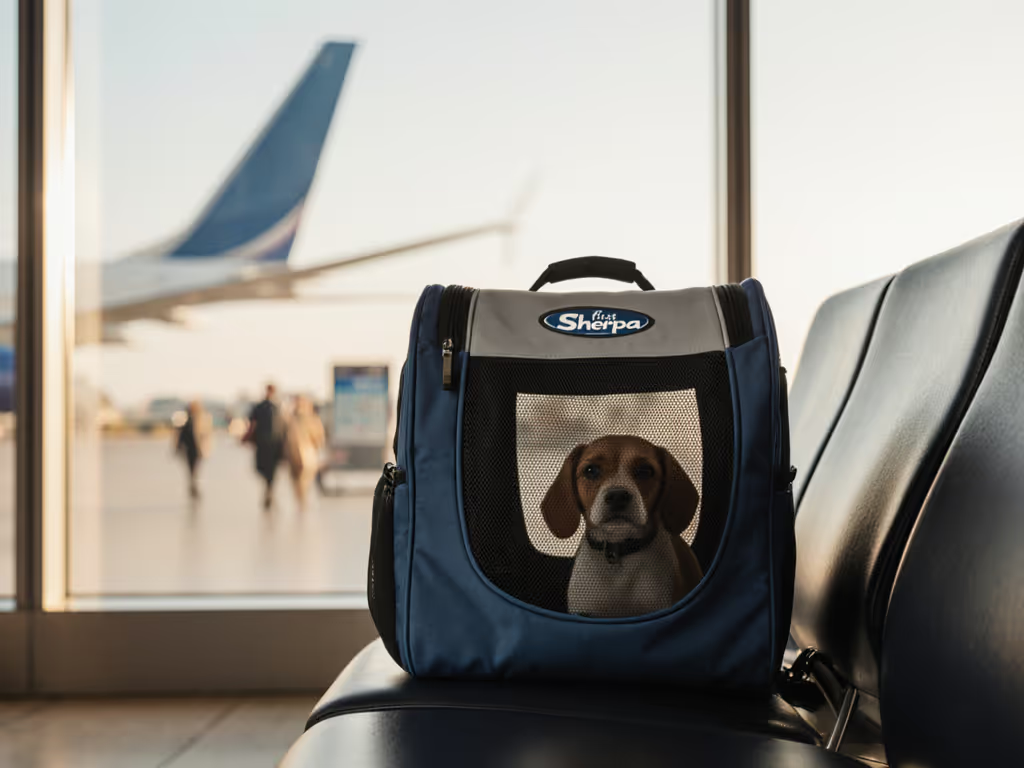
Happy Ride fit: The collapsible crate works well for car containment. For flights, you'd need a separate soft-sided under-seat carrier (e.g., Sherpa or similar, ~$50-70). The seat cover protects your commute car, but you don't use it on road trips (because cargo liner is used instead).
Cost: ~$120 (crate + seat cover) + ~$60 (cabin carrier) = $180 total for mixed-mode travel.
Better alternative: A single, airline-compliant soft-sided carrier (~$80-100) handles both car and cabin if you train your pet properly and secure it with a seat-belt harness for car drives. One purchase, one device, one familiar space for the pet.
Happy Ride verdict for this scenario: Adds complexity without clear win. The setup is car-optimized but requires compromise on flights.
The setup: Two 18-lb dogs; mostly weekend drives to hiking/camping; one international flight per year.
Happy Ride fit: The cargo liner (in an SUV) is excellent. The collapsible crate handles one dog in-cabin during car trips. Both seat covers protect if dogs ride up front.
Cost: ~$100 (cargo liner + seat cover combo) + ~$60-100 (separate cabin carriers × 2 for flight) = $160-200 total.
Happy Ride verdict for this scenario: Strong value for car-centric travel. Cargo liner eliminates the need for blanket layering and makes cleanup fast. For flights, you'd still face dual-carrier swap and familiarization lag, but the car infrastructure is solid.
The setup: 12-lb cat; frequent short flights (1-2 per month); heavy Uber/taxi use; no personal vehicle.
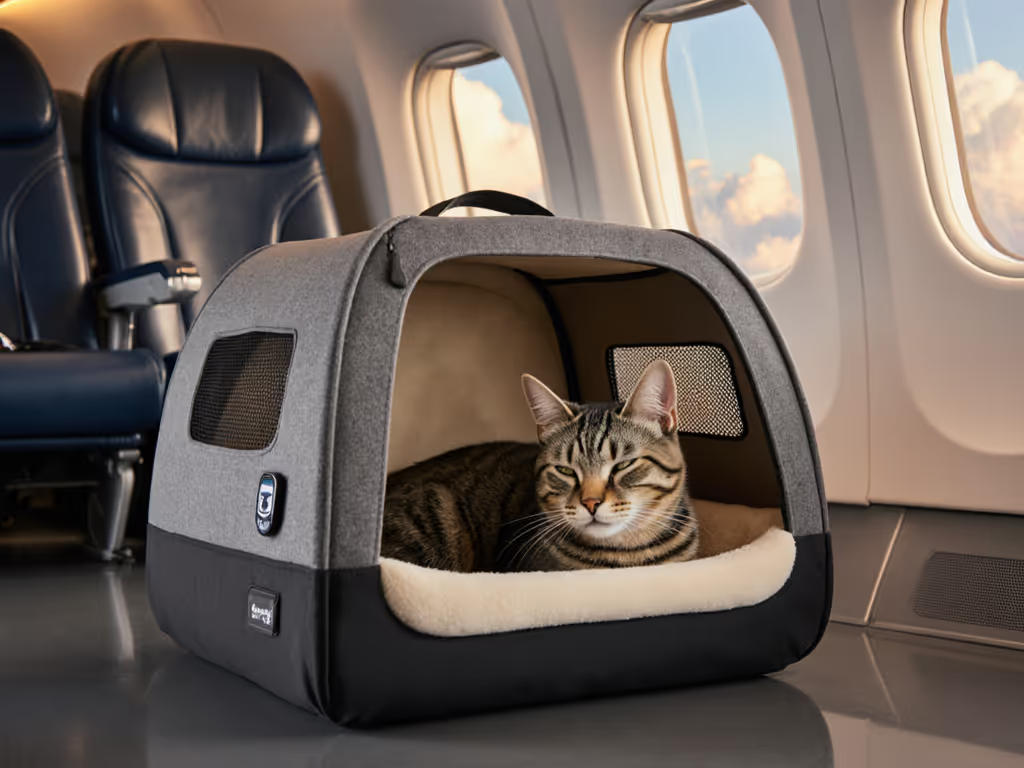
Happy Ride fit: None of these products are relevant. The cat needs a compact, cabin-compliant soft-sided carrier (~$40-60) and possibly a carrier backpack for walkable neighborhoods. Seat covers and cargo liners are car-specific; rideshare vehicles are off-limits for pet owner customization.
Happy Ride verdict for this scenario: Not a fit.
At $24.99-39.99 per item, PetSafe Happy Ride products are mid-tier in the car protection market. They're not the cheapest (you can find basic seat covers for $12-15) and not premium (high-end crash-tested carriers run $150-300).
For car-primary use: $90-120 for a multi-piece setup is reasonable and delivers measurable durability.
For mixed-mode (car + flight) use: The value erodes because you're buying products that don't cross over into air travel, forcing a second purchase.
Bias note: I favor carriers that consistently pass real-world sizers across multiple airlines, even if heavier or pricier. The Happy Ride products don't attempt this; they're deliberate car specialists. That clarity is honest, but it's not what your multi-mode travel needs.
Let me map this back to the pain points that matter most to frequent-travel pet owners:
Confusing airline/transit rules: PetSafe offers no guidance. The packaging doesn't reference airline compliance.
Fear of gate denial: The crate alone won't solve this; you need measurement verification against specific airlines' under-seat diagrams, which the product doesn't provide.
Temperament accommodation: No options for privacy, reduced noise, or chew-resistant mesh. Standard mesh is loud and anxiety-unfriendly.
Multi-mode needs: The product line requires separate purchases for car and flight, creating pet-experience fragmentation.
Ergonomic strain: The seat cover and cargo liner reduce pet-related mess on your car, which is a quality-of-life win, but they don't address human carrying ergonomics (backpack straps, roller wheels) for terminal walks.
Documented compliance: No airline partnerships, no compliance attestations, no real-world sizer tests published by PetSafe. You're on your own for verification.
PetSafe products typically come with a 1-year manufacturer's warranty covering defects. Amazon's return window (as of 2026) is generally 30 days for standard items. If you purchase based on website dimensions and the crate doesn't fit under your car's seat or doesn't work for your pet's temperament, you have a narrow window to reverse course. No "fit guarantee" or "compliance verification" programs are offered.
What PetSafe Happy Ride Does Well:
What PetSafe Happy Ride Does Not Do:
PetSafe Happy Ride is an excellent choice if:
PetSafe Happy Ride is not ideal if:
The PetSafe Happy Ride line is honest about what it is: a car-centric pet transport and containment system. It's not attempting to be an all-purpose travel solution. The real issue is that many buyers expect it to be. They see "travel" on the label and assume cabin-ready. They measure their pet against the printed dimensions and assume airline compatibility. Then they arrive at the gate and face reality.
Measure the cabin, not just the carrier's tag. If your cabin travel (flights, rideshare, public transit) is a regular part of your pet-parent life, you need a separate, under-seat-verified soft-sided carrier. The Happy Ride products are excellent for cars. Keep them for that purpose. Don't try to stretch them into a universal role they're not designed to play.
If your travel is car-dominated, this is a solid, affordable, durable purchase. The seat cover and cargo liner will save you upholstery damage and cleaning time. The collapsible crate is practical for hotel rooms and home containment. Invest with confidence.
If your travel blends cars and planes, your journey starts with airline compliance, not product convenience. Measure your pet. Check your airline's exact under-seat diagram (not the summary on their website, dig into the PDF). Find a cabin carrier that passes a sizer test. Then, if you drive frequently, add the Happy Ride car products as complementary layers.
Compliance begins with accurate measurements and ends with zero surprises. The PetSafe Happy Ride products respect that principle in their car context. Make sure you do too, especially if your world extends beyond the driveway.