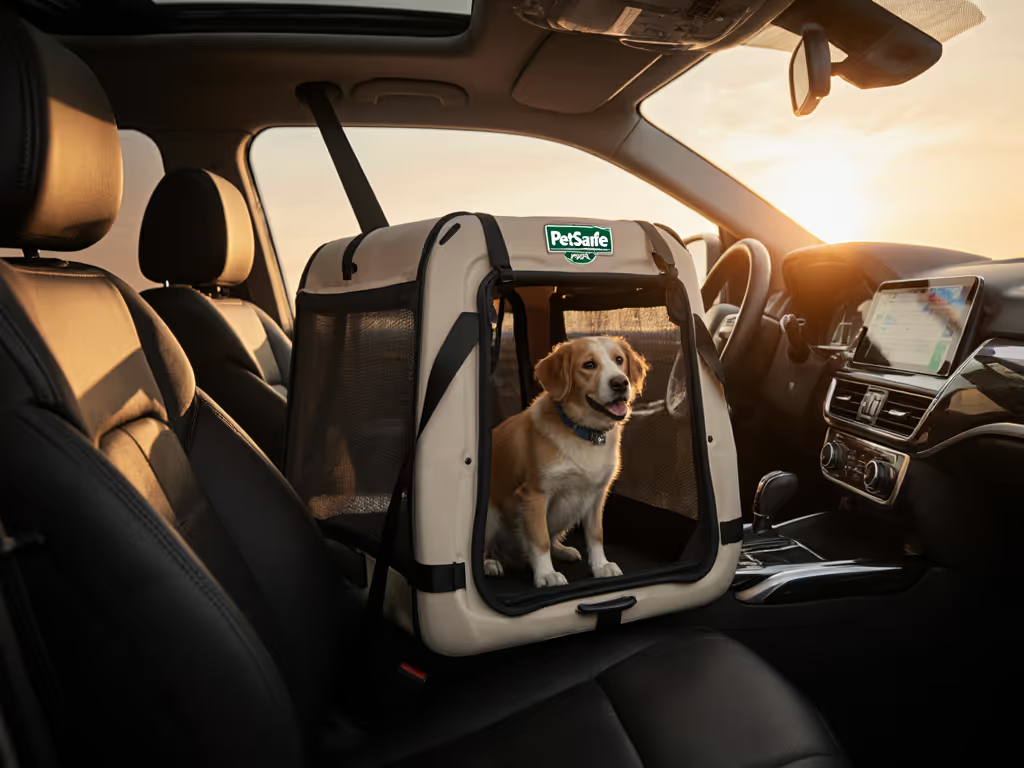
PetSafe Happy Ride Review: Tested for Car Safety
6th May•15 min read
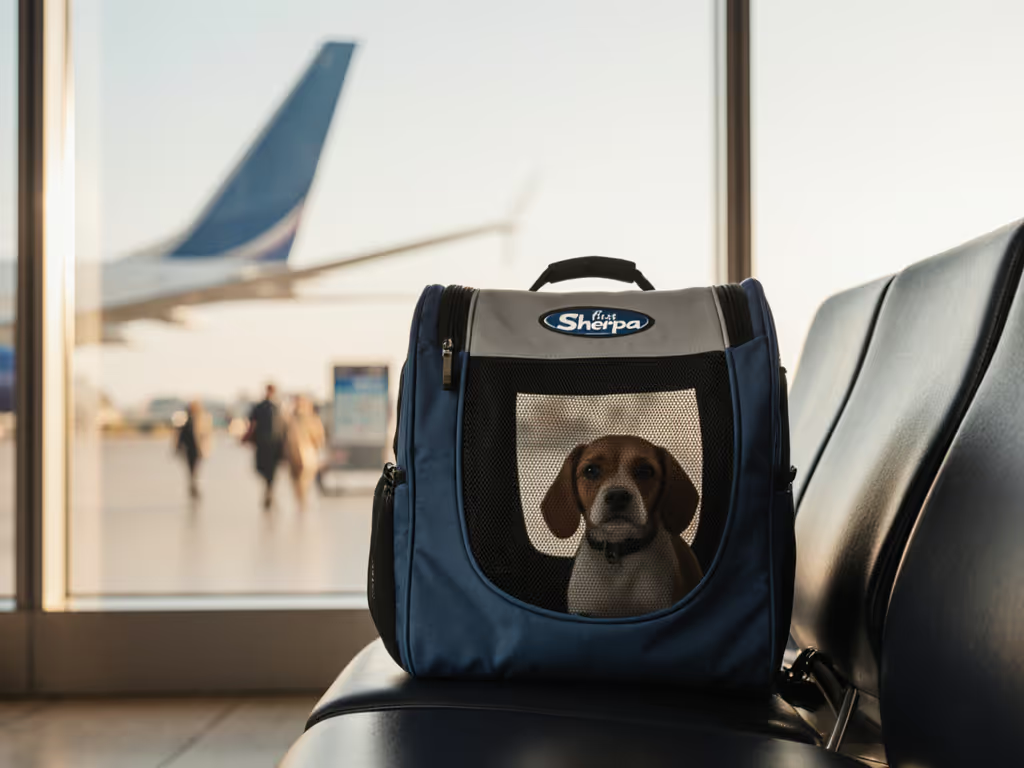
When it comes to pet air travel, the difference between smooth boarding and gate confrontation often comes down to one thing: whether your carrier actually fits the airline's under-seat geometry. The Sherpa Original Deluxe review landscape is crowded with praise for comfort features and style, but what matters most is measurement, and how that carrier performs against real enforcement standards. This guide cuts through marketing claims and delivers what frequent-flying pet parents actually need: precise sizing data, compliance mapping, and a go/no-go checklist for your specific airline and aircraft type.
Airlines publish under-seat dimensions, but those specs exist in a vacuum. A carrier may fit the stated dimensions while still creating friction (literally) when pushed into the actual seat frame in front of you. The mesh buckles, the zipper catches, or the rigid frame catches the leg rest hinge. These moments happen at the gate, when you're already checked in, and they're stressful for you and your pet.
The Sherpa Original Deluxe was designed with a patented spring wire frame that addresses this exact problem. Unlike rigid-sided carriers, the rear end can be compressed several inches to conform to under-seat requirements without sacrificing interior pet head space. That flexibility is the foundation of compliance. But flexibility alone isn't enough, you must match the carrier size to your pet's measurements and document those measurements against your airline's published specs before you depend on it. Start with our airline carrier regulations guide for size limits, paperwork, and measuring tips.
The Sherpa Original Deluxe comes in three dimensions, each targeting a different weight and body profile.
Small Model
Medium Model
Large Model
Importantly, the small and medium sizes are included in Sherpa's Guaranteed On-Board program, while the large may fit under the seat on some aircraft (but not all). Before purchasing the large, cross-reference your airline's specific under-seat depth and the aircraft you'll fly. A Boeing 737 cabin is tighter than a 777.
Many carriers fail at gate checks not because they're too large, but because the pet was measured incorrectly at purchase time. Here's how to take accurate measurements:
Once you have these, compare them to the published pet profiles for each Sherpa size. If your dog is 14" long and 9.5" high, the medium is a match. If your cat is 16" long, don't force the medium, go large.
The Sherpa's patented spring wire frame is not marketing hype, it's functional. The rear end can be pushed down several inches, which is why it works on aircraft where rigid carriers fail. But here's the critical caveat: compression only works if your pet isn't so large that pushing the rear down creates painful pressure on their hindquarters. If your 20-pound dog barely fits at full height, compression will injure them.
Before booking your flight, test the compression in your home:
This simple home test prevents gate conflicts and pet discomfort.
The Sherpa features mesh panels for ventilation, which satisfies airline requirements that carriers allow pets to breathe. The mesh is coated to prevent tearing (important for anxious or chewer pets). However, mesh also creates visibility into the carrier, which some pets find stressful. If your pet is anxious, you may want to drape a light blanket over two sides while maintaining ventilation on others. Mesh panels alone don't solve motion sickness or fear; you'll need training and possible calming aids.
One of Priya's most frequent gate observations: zippers that fail mid-journey. The Sherpa uses heavy-duty escape-proof locking zippers, tested to resist a pet pulling from inside. This is not a trivial feature. Cheap carriers with flimsy sliders contribute to gate disputes when a pet is found partially unzipped. The Sherpa's snaps, zippers, and D-rings are solid enough to survive stress testing.
The Sherpa offers both top and side entry, which is essential for pets that resist being lowered into a front-facing carrier. Top entry is especially useful for cats and dogs that crouch when approached from the side. Side entry works for pets that are comfortable sliding in horizontally. This dual-entry design reduces loading conflicts, a hidden pain point for many pet parents.
Accidents happen. The Sherpa includes a removable, machine-washable faux lambskin liner, plus a waterproof interior base. This is non-negotiable for compliance with airline cleanliness standards. If your carrier smells or shows staining, staff can refuse to allow boarding. The removable design lets you clean in minutes, not days. Follow our deep clean carrier guide to remove stubborn odors and prevent mildew between trips.
Your comfort during travel affects your pet's stress level. If you're strained or rushed, your pet feels it. The Sherpa addresses this with multiple carry modes:
But here's the realism: even the best strap becomes uncomfortable on a three-hour airport walk with an 18-pound dog. Test your plan. If you'll be walking far, consider requesting a cart at the airport, or plan a rest stop. Ergonomic features reduce risk, but they don't eliminate the physical reality of carrying a compact but dense object for sustained periods.
The large side zippered pocket holds pet travel documents, health certificates, vaccination records, or a small guidebook. This is compliance gold. If a border agent or airline staff asks for documentation, you can produce it quickly without unzipping the main compartment and stressing your pet. Keep that pocket organized: document it before you depend on it.
The Sherpa is approved for most major airlines, and the small and medium sizes are part of Sherpa's Guaranteed On-Board program (meaning Sherpa stands behind compliance for those sizes). However, "approved for most airlines" is not a guarantee for your specific airline or aircraft. Here's what you must do:
Domestic U.S. carriers (American, United, Delta, Southwest) generally accept small and medium Sherpas on narrow-body aircraft (737, A320). International carriers vary widely. Some European airlines have stricter height limits. Middle Eastern carriers may not allow soft-sided carriers at all. Your measurement-first approach ensures you're never surprised.
International flights introduce uncertainty. Aircraft change. Under-seat geometry varies by seat configuration (economy vs. premium economy). Some airlines measure, others don't. The Sherpa's compressibility and moderate weight make it more adaptable than hard-sided rivals, but adaptability is not a free pass.
For international routes:
The Sherpa Original Deluxe uses polyester (82%), PVC plastic (5%), and metal hardware (3%), among other materials. This is not premium dog gear, it's functional travel gear. Users report high ratings and note durability over multiple trips. The faux lambskin liner holds up to machine washing, and the spring frame doesn't permanently deform after repeated compression.
However, longevity depends on usage patterns. Heavy use (weekly vet visits + quarterly flights) will age the zippers and seams faster than occasional travel. Sherpa replacement liners are available separately, which extends carrier life.
Pets that resist entry (especially cats): Use the top zipper entry first. If that fails, try the side entry. Consider familiarizing your pet with the carrier at home for 1-2 weeks before travel, rewarding entry with treats. This requires planning, but it eliminates day-of stress.
Motion sickness or anxiety: The mesh ventilation helps, but a carrier doesn't treat underlying anxiety. Consult your vet about calming supplements or pheromone sprays before travel. Some pet parents drape a blanket partially over the carrier to create a "den" feel, reducing visual stress. The Sherpa's neutral gray or black color works well for this.
Overheating in warm climates: The mesh panels offer airflow, but a carrier in a hot car or warm airport is still a risk. Freeze a cool pack, wrap it in a cloth, and place it in the storage pocket (not inside the carrier, where the pet could touch it). Arrive at the airport early so your pet is not waiting in a warm vehicle.
Odor retention: Wash the liner every trip, not just when visibly soiled. Urine odor can linger in the waterproof base. Use a pet-safe enzymatic cleaner on the interior after washing the liner.
The Sherpa Original Deluxe is the most measurement-friendly, compliance-proven soft-sided carrier for millennial and Gen X pet parents traveling by air, car, and foot. Its spring wire frame, dual entry, escape-proof zippers, removable liner, and multiple carry modes address the core pain points of international and domestic pet travel. The small and medium sizes come with a Guaranteed On-Board program, reducing your stress at check-in.
Buy it if:
Skip it if:
Measure the cabin, not just the carrier's tag. That's the promise of a measurement-first approach, and it's how you travel with your pet without surprises at the gate.