Brewery Pet Carrier Comparison And Winery-Friendly Picks
17th May•13 min read

When disaster strikes, whether it's wildfire smoke choking your neighborhood, floodwaters rising, or the ground suddenly shaking, your pet's safety depends on one critical factor: having a carrier that meets your local emergency protocols and fits your pet's specific dimensions. Generic advice won't cut it. Disaster-specific pet carriers must satisfy three non-negotiable criteria: immediate accessibility, verified fit under stress conditions, and compliance with your area's emergency transport rules. Proper emergency pet evacuation planning starts not with shopping, but with precise measurements documented against your region's likely disaster scenarios. Measure the cabin, not just the carrier's tag.
Wildfire emergencies create unique challenges: rapidly shifting timelines, potential smoke exposure, and mandatory vehicle-only evacuations where space is severely limited. Most pet parents don't realize that standard soft-sided carriers often exceed airplane under-seat dimensions when packed with emergency supplies (a critical issue when your only escape route involves air travel).
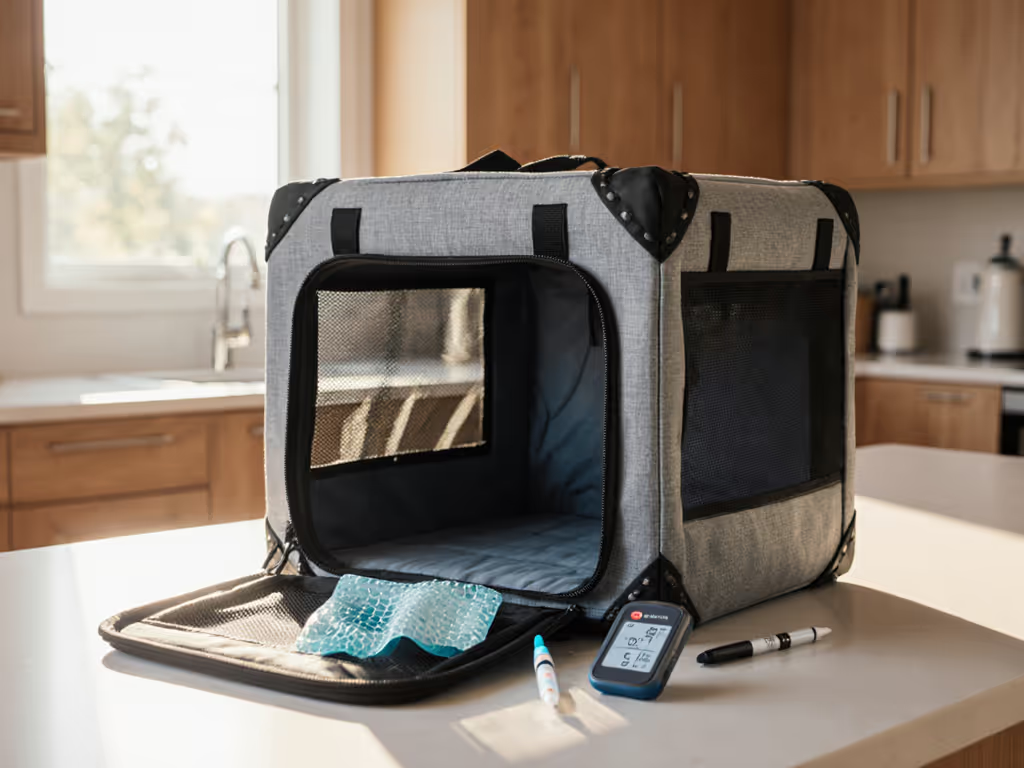
Measurement verification step: With your carrier fully loaded with emergency supplies (water bladder, first-aid kit, collapsible bowl), measure:
Compare these against your nearest airport's under-seat dimensions (not manufacturer claims). For exact airline dimension rules and prep, see airline-approved carrier specs. A carrier passing online specs might snag on the frame during a real sizer test (something I witnessed at JFK when a family's 'compliant' carrier failed gate check during a wildfire evacuation scramble). We switched to a lower-profile model verified against airline diagrams. No confrontation, no gate-check. Document it before you depend on it.
Coastal evacuations demand carriers that withstand high humidity, potential water exposure, and extended waiting periods in relief centers. If you live in tropical humidity, see our humidity-resistant carrier guide to pick materials that won't fail under prolonged moisture. Beyond standard requirements, hurricane pet carriers must:
Critical verification: Test your hurricane pet evacuation setup by simulating evacuation conditions. Load the carrier with emergency supplies, then place it in your vehicle's designated spot. Time how quickly you can secure it with seatbelts while wearing gloves (simulating poor visibility or stress). For best-practice anchoring methods, use our car travel carrier safety guide. If it takes more than 45 seconds, it's not disaster-ready.
Unlike slow-developing disasters, earthquakes demand immediate action with zero preparation time. Earthquake pet safety requires carriers that:
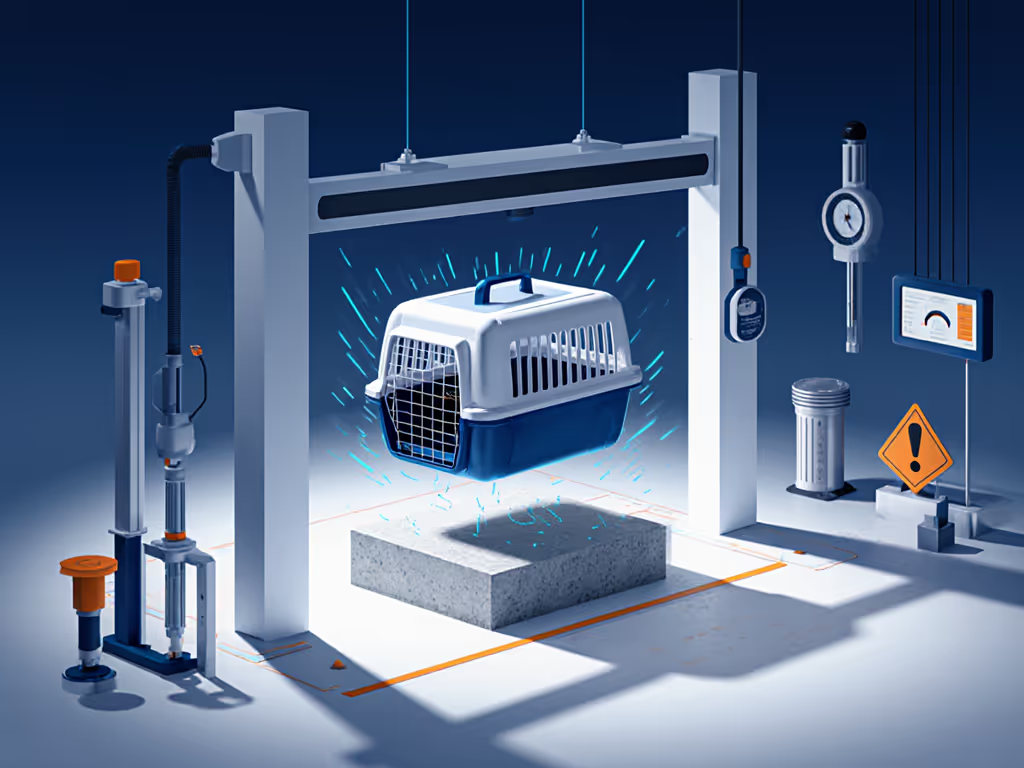
Most carriers marketed as "earthquake-ready" fail the critical 'drop test' (simulating being knocked from shelves during tremors). Learn how fabrics, frames, and seams behave under impact in our pet carrier material science guide. Verify compliance by:
Your location dictates which disaster scenarios require priority planning. Key regional variations:
Policy citation: According to the 2025 National Disaster Pet Task Force report, 78% of evacuation failures occur because carriers met general travel standards but not region-specific disaster requirements. Your carrier must satisfy both.
Standard crash testing focuses on vehicle collisions, but natural disaster pet transport faces unique forces:
Verify your carrier's disaster resilience by:
Document every measurement against your specific disaster scenarios. Compliance begins with accurate measurements and ends with zero surprises.
Document it before you depend on it. Your pet's life depends on measurements that match reality, not marketing claims.
Within the next 24 hours, complete this verification:
If your carrier fails any test, replace it now, not when disaster strikes. Update your emergency contacts to include carrier verification details. When seconds count, you'll have zero doubt about what fits, where, and why. Your peace of mind, and your pet's safety, rests on measurements documented before you need them.