Brewery Pet Carrier Comparison And Winery-Friendly Picks
17th May•13 min read
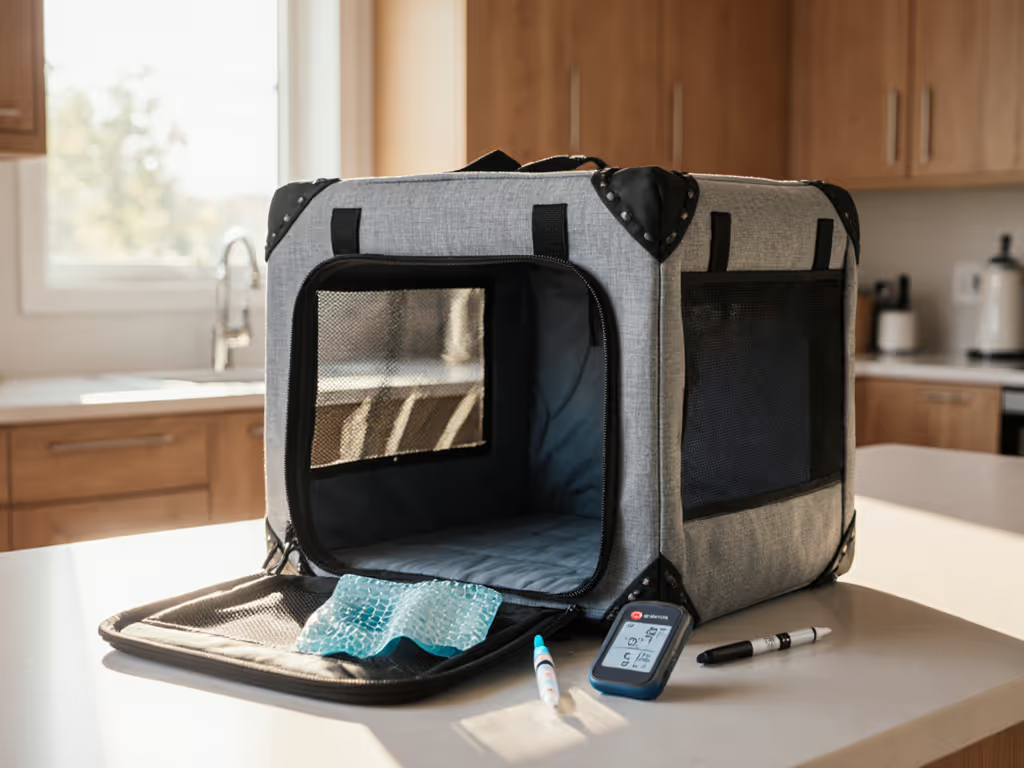
When your dog has epilepsy, a carrier transforms from convenience into critical infrastructure. An epilepsy-friendly pet carrier isn't just a container, it is a medically informed design that works within a specific window of vulnerability. For travel, this compounds the challenge: you need a seizure-safe pet travel solution that meets airline dimensional rules, provides escape-proof containment, and ensures proper airflow simultaneously. Yet most carriers prioritize aesthetics or portability over the safety requirements that matter most during a neurological emergency.
Traveling with a dog who seizes requires understanding why certain design choices matter, which ones are negotiable, and which represent genuine safety trade-offs. This guide walks through the core features that define a seizure-safe carrier, grounded in ventilation science, emergency protocols, and the real-world constraints of transport regulations.
A seizure fundamentally changes what a carrier must do. During a typical trip, your carrier contains and protects. During a seizure, it must do something more: it must prevent injury while the dog loses motor control, maintain airflow despite potential respiratory compromise, allow rapid access for emergency intervention, and absorb impact without creating new hazards.
Standard soft-sided carriers often sacrifice ventilation for collapsibility. Hard-sided plastic crates designed for storage do not account for the quick-release access paramedics or vets need in emergencies. Many carriers marketed for "travel" lack the firm, consistent padding that prevents thrashing injuries. The mismatch forces owners to choose: comply with airline rules or prioritize seizure safety, rarely both.
Proper airflow is not a luxury upgrade. Dogs experiencing seizure activity often develop hyperthermia, body temperatures that spike dangerously. Excessive bedding, reduced ventilation, or sealed designs can trap heat and create a medical crisis within a medical crisis.
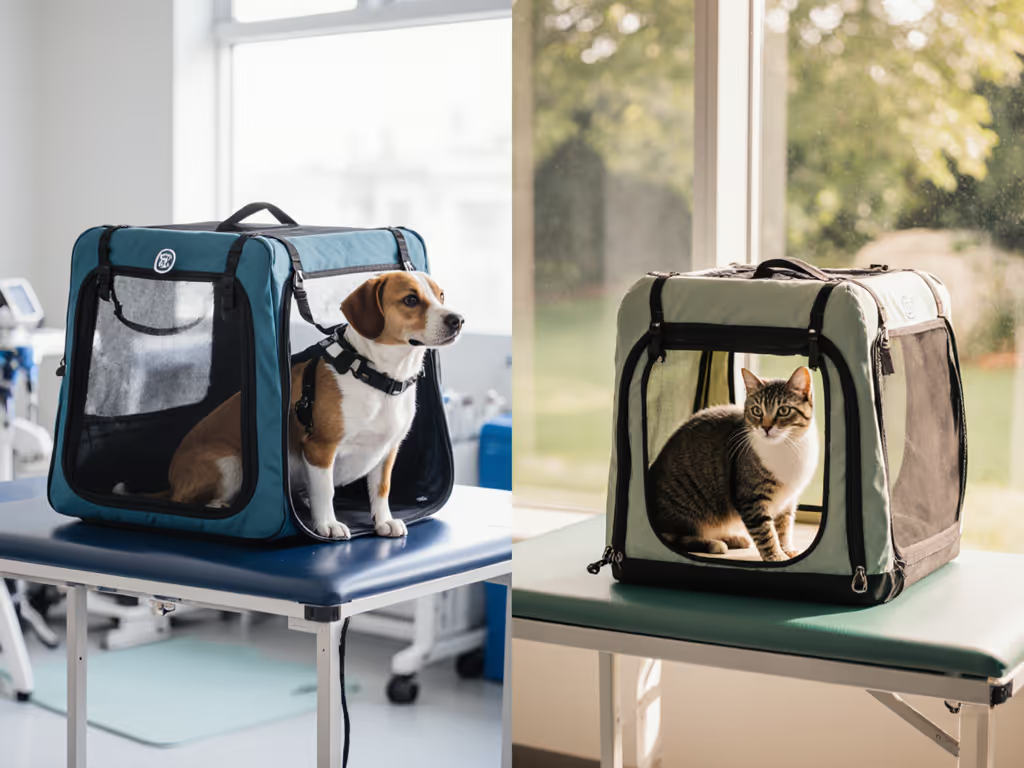
A seizure-safe design features optimal ventilation on all sides, not just the front. This means perforated or mesh panels that provide continuous airflow even if your dog presses against one side. Some carriers use rigid frame construction with multi-directional venting that outperforms soft-sided mesh in accident scenarios while maintaining superior breathability. The goal is airflow that functions whether your dog is conscious and calm or seizing and disoriented. For deeper testing methods and airflow principles, see our pet carrier ventilation science guide.
Carrier sizing for seizure-prone dogs follows a different calculus than standard travel guidelines. The conventional wisdom, "just enough room to turn around," can become dangerous during a seizure. Your dog needs enough space to move without thrashing into walls, yet not so much that violent movements gain dangerous velocity.
Rule-checked dimensions matter here. Measure your dog's length (nose to base of tail), height at the withers (top of the shoulders), and girth (around the ribs). Your carrier's interior should provide 2-4 inches of clearance in each dimension. To measure accurately and confirm airline fit, use our airline-approved carrier measuring guide. This prevents the disorientation and claustrophobia that trigger panic, while the modest boundaries contain involuntary thrashing. Too large, and a seizing dog becomes a projectile; too small, and anxiety escalates before a seizure even begins.
The padding inside your carrier performs critical functions beyond comfort. It absorbs impact, distributes weight evenly, and prevents a hard surface from becoming a source of injury during involuntary movements.
Seizure-safe carriers require firm, consistent padding (2-4 inches thick) that will not shift during movement. Orthopedic foam with antimicrobial covers works well because the density resists compression while remaining washable, essential after seizure incidents involving incontinence. Avoid loose blankets, thick pillows, or toys; these become collision hazards or choking risks if your dog's breathing becomes labored.
Interior edges matter equally. Rounded corners and seamless designs eliminate the sharp points where a convulsing dog might cut itself. Check the interior for protruding hardware, rough seams, or gaps where a collar or paw could catch.
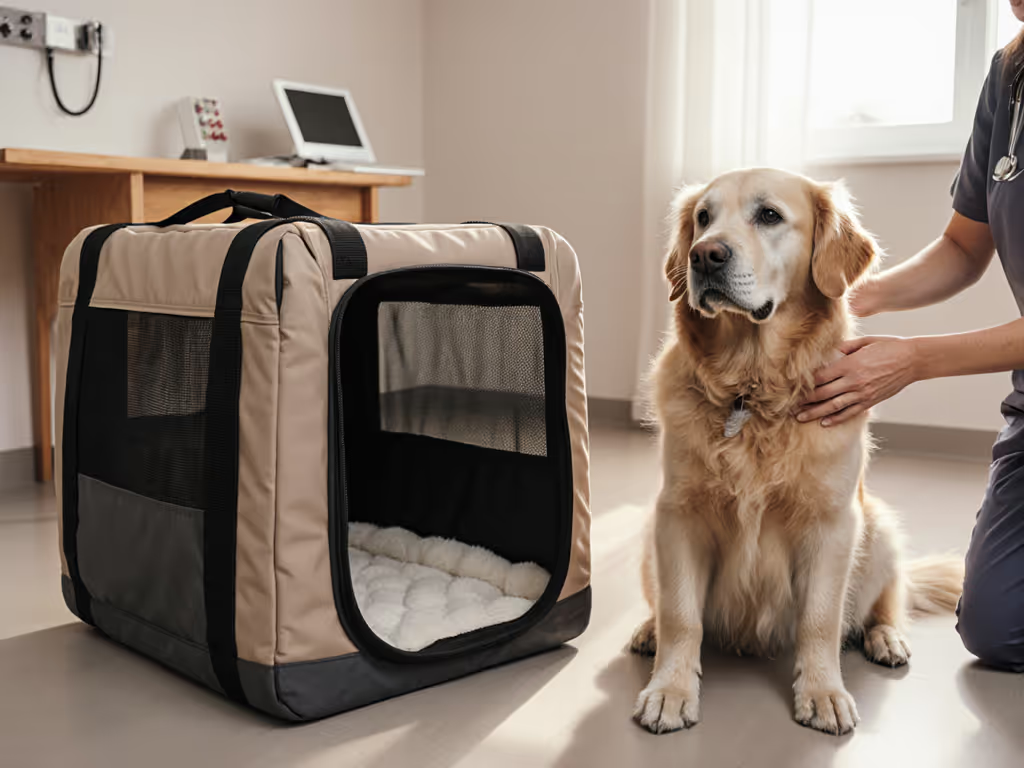
In a seizure emergency, seconds determine outcomes. Your carrier's latching system must be secure enough to contain a thrashing dog yet accessible enough that a vet can open it without fumbling. This is where design meets emergency protocol.
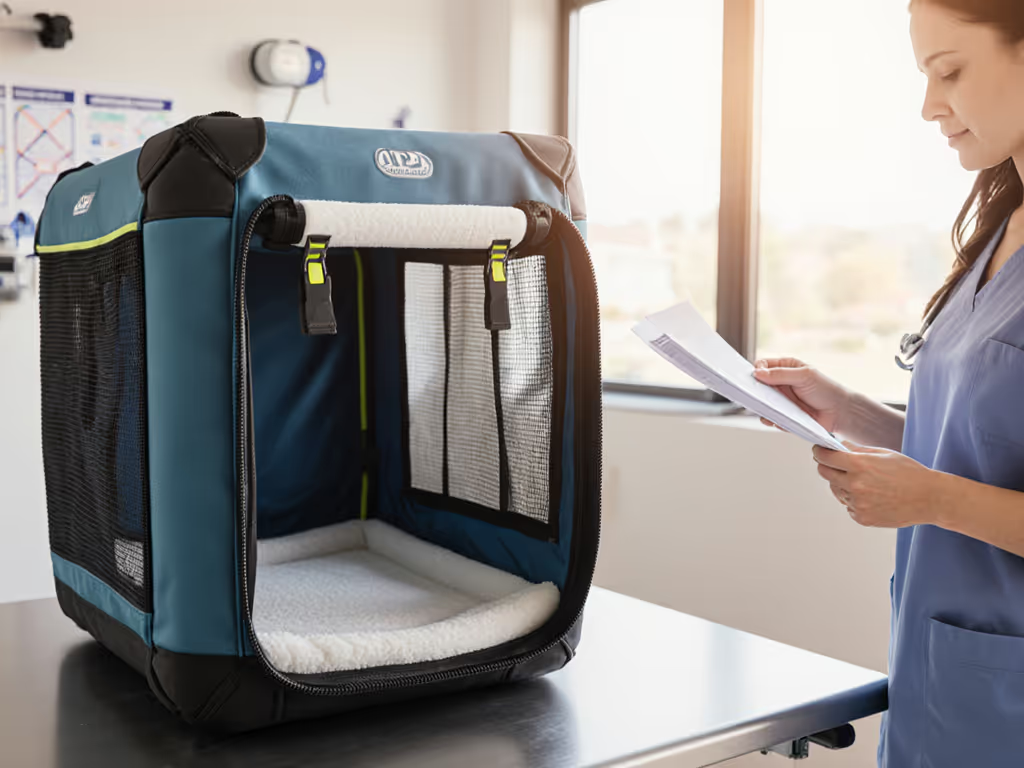
Look for dual-latch systems that lock securely (preventing escape during transport) but release smoothly (allowing rapid intervention without tools). Zippers should be robust (YKK or equivalent quality, with reinforced teeth) because a panicked or seizing dog will scratch at closures. Some carriers add lockable slider gates alongside zippered panels, providing both security and quick-release options for emergency access.
An epilepsy-friendly carrier must also pass real-world scrutiny. Airlines use specific dimensional requirements; rideshare drivers have their own enforcement; TSA screeners follow federal guidelines. A seizure-safe design that fails compliance checks becomes unusable, forcing you to choose between safety and transit access.
This is where visual minimalism serves function. Carriers that read as professional luggage rather than novelty pet bags face less scrutiny at gates and security checkpoints. Neutral colors, clean hardware, and minimal decoration make a carrier disappear from scrutiny while performing its primary role in quiet. The design should not announce itself; it should work.
Car travel introduces different constraints. Review vehicle best practices and our crash-tested carriers checklist to secure your setup. A seizure-safe vehicle setup emphasizes both containment and crash protection. Hard-sided crates with proper ventilation secured with seat-belt anchoring provide the structural integrity that soft carriers cannot match during impact.
In a car, your carrier also serves as a barrier, preventing a seizing dog from injuring you or becoming a driving hazard that endangers other vehicles. Firm padding, secure latching, and side-access doors allow you to load or unload without lifting a heavy crate. Some carriers integrate tie-down loops specifically for vehicle anchoring, addressing both seizure containment and crash safety simultaneously.
No carrier, however well-designed, replaces active observation. Position your carrier in a central location where household activity provides natural monitoring. During travel, pet cameras with mobile alerts allow remote observation, crucial for flights or long car rides when you cannot be physically present. If real-time vitals matter for your dog, compare smart health-monitoring carriers before your next trip.
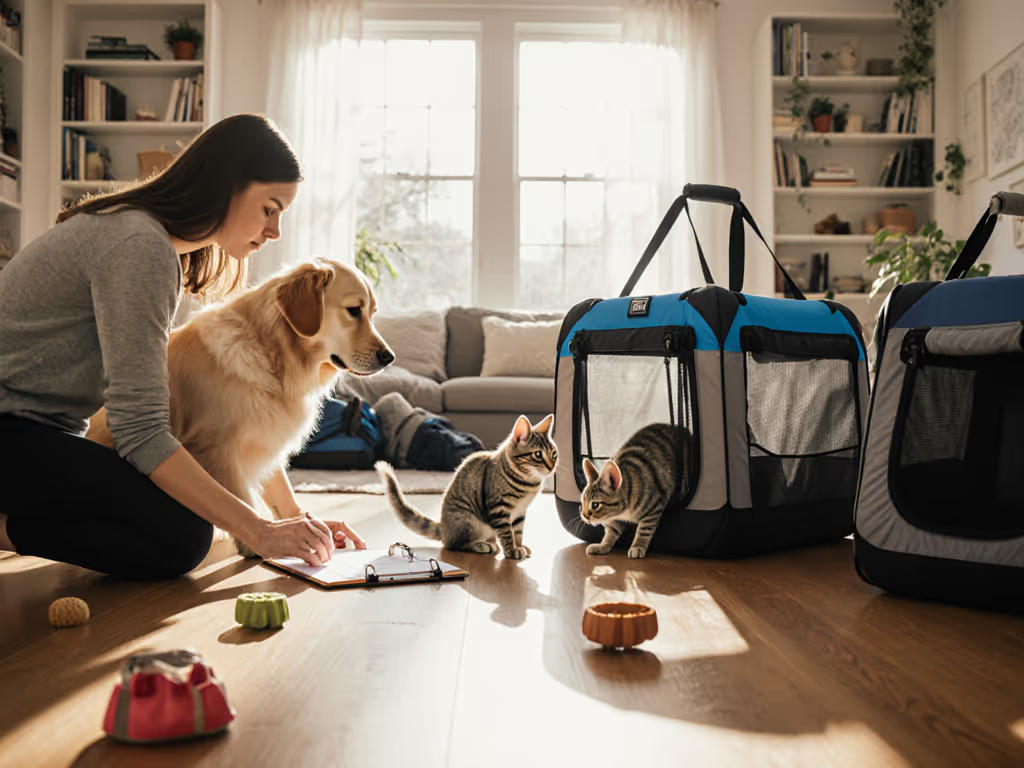
Learn your dog's pre-seizure behaviors: restlessness, disorientation, seeking isolation. Keep a seizure log noting time, duration, and recovery patterns. This documentation helps your vet identify triggers and guides your carrier choice (for example, if seizures cluster during heat exposure, ventilation becomes even more critical).
Seizure incidents often involve incontinence. Your carrier's design must accommodate frequent, thorough cleaning without degrading materials. Removable, machine-washable liners, waterproof underbeds, and antimicrobial fabrics are not luxuries, they are functional necessities. For step-by-step sanitation that preserves materials, follow our deep clean pet carrier guide.
Avoid carriers with glued or permanently sealed construction; you need access to the interior for deep cleaning and inspection for damage.
Blend in visually, stand out in quiet function. This principle defines seizure-safe design. A carrier that looks "cute" but sacrifices airflow, uses novelty shapes that compromise fit, or relies on trend-driven materials over tested durability becomes a liability during an emergency.
The carriers that perform best often read as understated: neutral palettes, refined hardware, and clean lines that reduce gate scrutiny while delivering where it matters, in ventilation science, structural integrity, and emergency access.
Choosing a seizure-safe carrier requires moving beyond standard size charts and marketing claims. Verify interior dimensions against your dog's measurements, confirm ventilation design specifications with manufacturers, and test latching mechanisms in person before a critical journey. Ask your veterinarian whether your dog's specific seizure patterns suggest additional design priorities, heat sensitivity, anxiety triggers, or recovery disorientation that should inform your choice.
Contact airlines with your carrier's exact dimensions and design details to document compliance before travel. This precision-first approach transforms a stressful uncertainty into documented, rule-checked confidence.