
Brewery Pet Carrier Comparison And Winery-Friendly Picks
17th May•13 min read
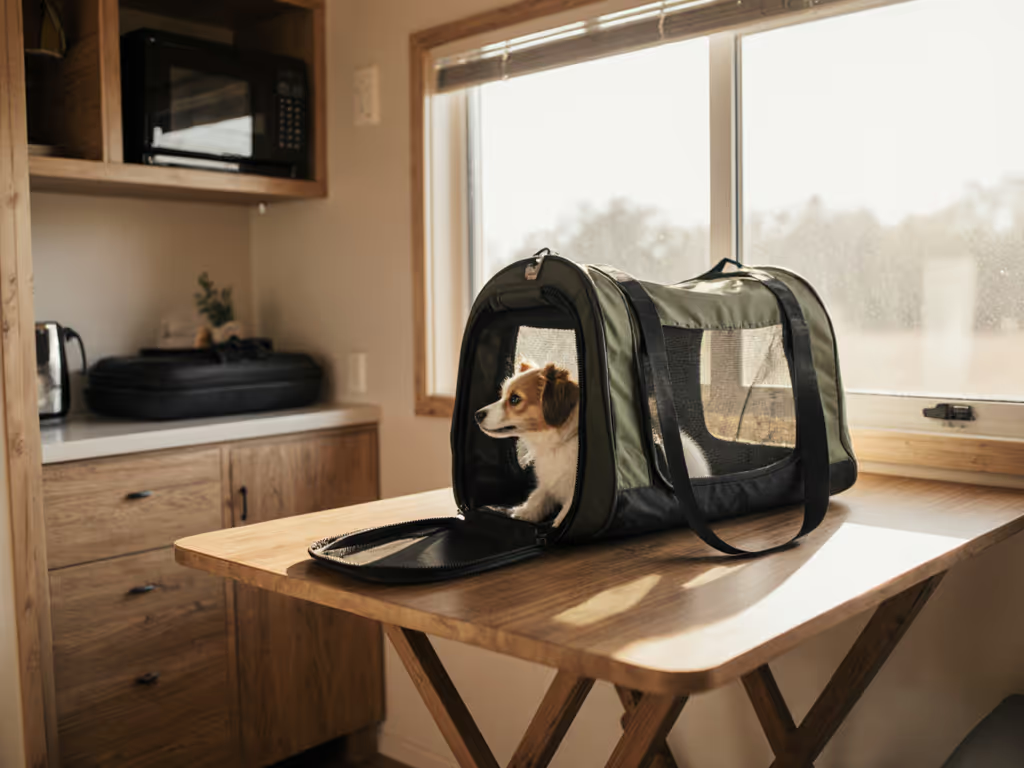
When your living space measures in square feet, not square yards, every inch counts, especially when your emotional support animal needs a certified small soft-sided pet carrier that won't sabotage your pet therapy in tiny homes. I've seen carriers fail catastrophically in cramped apartments: mesh ladders from a nibbling Yorkie, zippers splitting under a terrier's sudden lunge, seams popping when wedged behind a fridge. Safety never depends on the strongest material (it hinges on the weakest component under real loads). Let's dissect what actually survives daily stress in micro-living scenarios.
Airlines famously demand soft-sided carriers under 18" L x 11" W x 11" H (like American Airlines' requirement; see our airline size and documentation guide), but tiny homes expose hidden flaws generic guides ignore. That "compliant" carrier? Compress it under your airplane seat, then try stuffing it into a closet beside your shoes. For space-constrained living, explore our carrier storage solutions for apartments. Suddenly, space-efficient therapy carriers must serve dual duty: passing gate checks and vanishing when not in use. Worse, apartment pet therapy sessions mean carriers face constant low-grade stress (wedged under furniture, dragged up fire escapes, or bumped by roommates). Standard advice rarely tests for this reality.
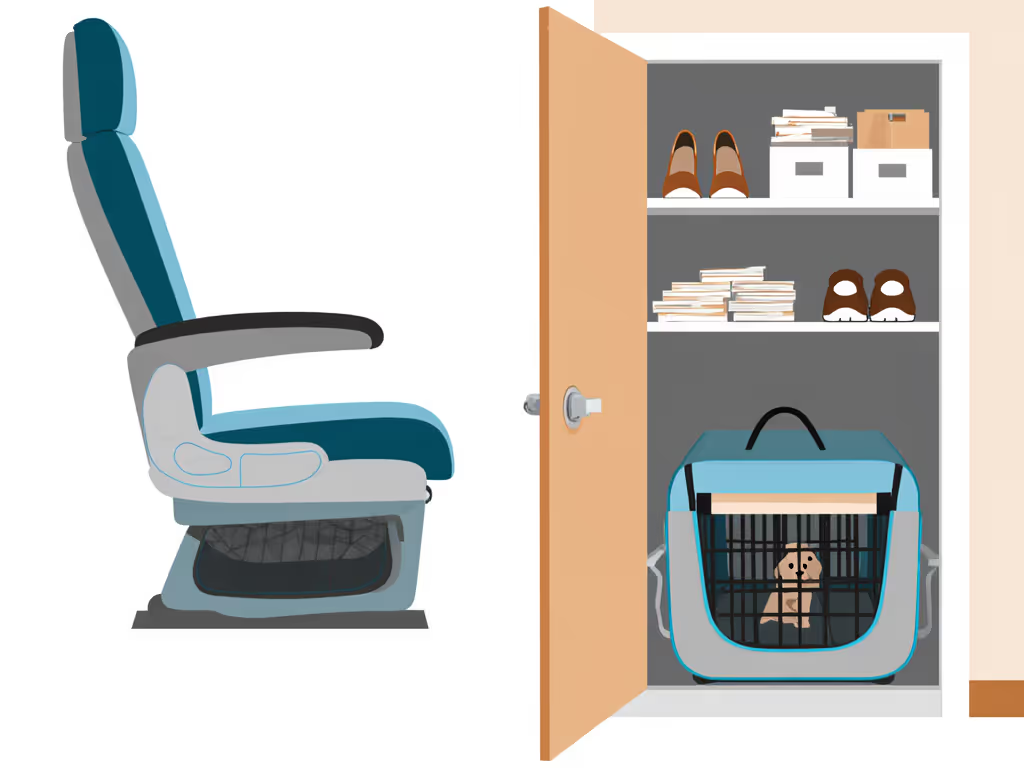
Most shoppers measure pets standing up. Mistake. In confined spaces (like a carrier under an airplane seat or squeezed behind a sofa), pets curl tightly. Your measurement protocol must:
Record compressed height: Have your pet snoozing in their favorite loaf position. Measure from floor to highest point when curled (not standing). Many "25lb" carriers fail here (broad-chested Frenchies exceed height limits when flattened).
Test side compression: Soft-sided carriers lose 1.5 to 2" of depth when squeezed against walls or furniture. Use a tape measure to simulate pressure (e.g., press carrier against a bookshelf). If interior space drops below your pet's curled height, reject it. If you’re considering collapsible or expandable models, see our expandable carrier air test to understand what airlines actually measure.
Verify airline and apartment clearance: "18x11x11" means nothing if your building's hallway closet is 10.5" deep. Measure your storage spot first.
Stress finds shortcuts where tension concentrates (like a zipper coil skipping under diagonal loads in a cramped elevator).
A: Airline rules focus on in-flight dimensions, but apartment life demands storage resilience. Key failure points:
A: Only if engineered for dual-mode stress. Most "dorm room pet therapy" carriers collapse into storage under beds, but flimsy frames buckle when loaded. Seek carriers with:
Critical note: If your pet exceeds 15lbs, verify both airline and dorm weight limits. Many colleges restrict carriers to 12lbs for hallway storage (far stricter than airlines).
A: Military housing demands rapid stowage in lockers or under bunks. For emergency readiness and packing checklists, use our disaster-ready carrier guide. These carriers face brutal handling: tossed into trunks, stacked in moving vans, exposed to extreme temps. Your stress test:
A: Instant compliance proof. When your apartment doubles as your office (and you're racing to a flight), you need documentation on the carrier. Top carriers include a woven tag stating:
"Complies with FAA 14 CFR §121.159(b)(2) and IATA Live Animal Regulations §8.3.2. Dimensions: 17.5"L x 10.5"W x 10.5"H (soft-compressed)."
Without this, gate agents will measure your carrier. Avoid surprises with our gate-check approval checklist. In cramped apartments, you lack space to reposition a wiggly pet for a second measurement attempt. One failed test risks missing your flight (and leaving your anxious pet home alone).
Forget "lightweight" or "sleek", your small soft-sided pet carrier must be a fortress that tucks away. Prioritize:

Carriers ignoring these fail where stress naturally travels first: at the zipper coil, the seam tape edge, the mesh corner. In tiny homes, there's no room for error, your pet's calmness, and your trip's success, hang on hardware you can trust. Choose a carrier that survives your reality, not just the airline's brochure. When space is scarce, overbuilt isn't bulky, it's essential.