Brewery Pet Carrier Comparison And Winery-Friendly Picks
17th May•13 min read
For pet parents navigating travel pet carrier requirements with visually impaired companions, standard solutions often fail where it counts: internal spatial awareness. A visually impaired pet carrier isn't just about opacity or darkness, it's engineered sensory architecture that replaces sight with trustworthy tactile feedback. When sight isn't an option, every seam, strap, and surface must perform double duty. For design features that calm overstimulated animals, see our sensory-friendly carrier guide. I'll show you how to select carriers that prioritize rule-checked dimensions while embedding subtle physical cues that keep blind pets oriented and calm (from boarding gate to destination). Remember: true design excellence makes safety invisible to observers but palpable to the user. fit-first, then finish.
Most soft-sided carriers prioritize visual aesthetics over functional texture mapping, a critical flaw when pets navigate by touch alone. Standard mesh panels create disorienting "voids" blind animals can't perceive as boundaries, while smooth nylon walls offer zero spatial reference. During my boarding experience at CDG, I observed how pets reacted to unfamiliar textures; my own carrier's subtle grain provided anchor points where others flailed. Without tactile landmarks, blind pets may:
The solution requires tactile pet carrier features that transform passive containment into an intuitive navigation system. This isn't about "special needs" modifications, it's about intelligent design that benefits all pets by reducing anxiety through sensory clarity.
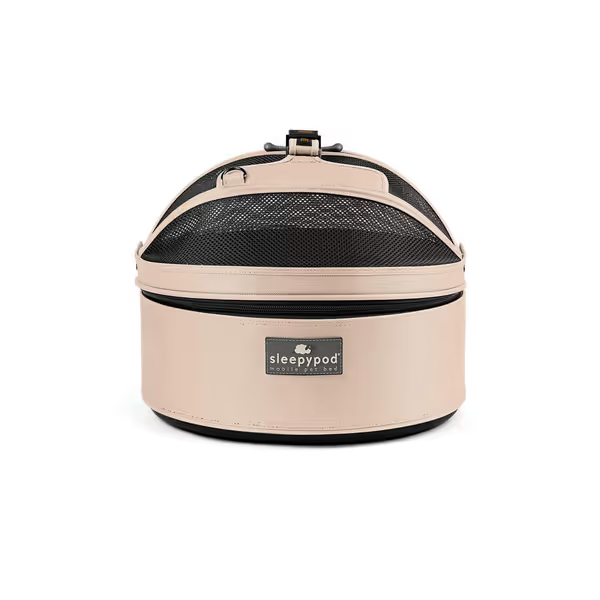
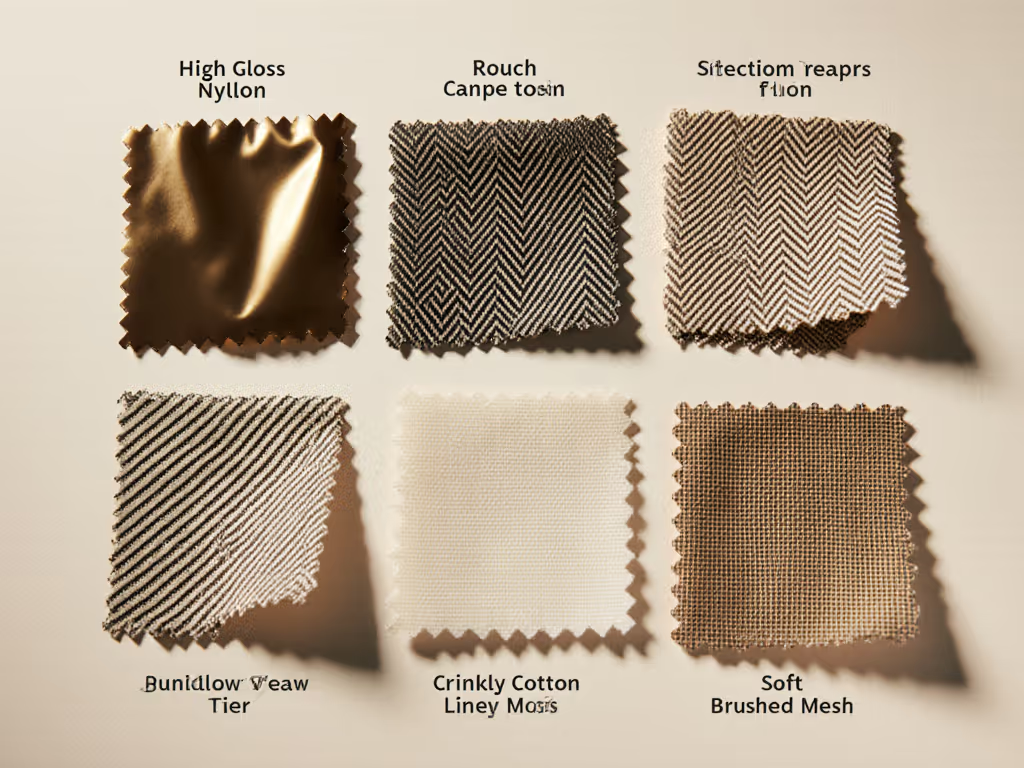
Integrate varying fabric densities to create "tactile blueprints" within the carrier. Place ribbed canvas along headrest zones (signaling "safe space"), smooth ripstop near ventilation panels (denoting airflow zones), and slightly raised stitching at door thresholds. These micro-landmarks let blind pets mentally map their environment without visual input. Sleepypod's models demonstrate this principle through intentional seam placement that guides movement, though any carrier can be adapted with non-slip pads at critical junctions.
As highlighted in pet safety expert Melanie Montero's research, the overlooked safety tether is vital for preventing bolting during transitions. For blind pets, this becomes non-negotiable. Key requirements:
The tether must click audibly into place, a critical feedback loop when sight fails. Never use tethers during vehicle transport; reserve them for airport security lines or vet waiting rooms where sudden noises could trigger flight responses. For vehicle-specific protocols and products, follow our car crash-tested carrier safety checklist.
Avoid plush liners that shift during motion. Blind pets rely on consistent floor textures. Opt for:
This aligns with my core belief: Good design should disappear in public and deliver in use. A carrier passing United's 17.5x11x11 dimension rule (like Mr. Peanut's model) becomes irrelevant if internal chaos triggers meltdowns.
Airlines universally measure external dimensions when compressed, yet standard carriers compress unevenly, creating hazardous internal voids. For step-by-step airline sizing and approval, read our Airline-Approved Pet Carriers guide. For blind pets, this distorts their spatial mapping. Rule-checked compliance requires:
| Airline | Max Dimensions (in) | Tactile Compliance Tip |
|---|---|---|
| United | 17.5 x 11 x 11 | Test compression: Walls must rebound instantly to maintain texture zones |
| Delta | 18 x 11 x 14 | Verify side panels resist bowing when tilted |
| American | 19 x 13 x 9 | Ensure floor stays rigid under 15lbs weight |
Never sacrifice ventilation for texture depth. Blind pets overheat faster when stressed. Four-side mesh (like PETUX carriers) provides airflow and consistent handhold reference points along all walls.
Before flying, simulate TSA screening:
If seams disappear or floors cave, the carrier fails blind pet safety, regardless of airline approval. True compliance means passing both the ruler and the paw test.
Integrate a distinct auditory trigger (e.g., specific clicker tone) paired with touching a textured panel. When your pet associates that sound with "find the ribbed wall," you create a lifeline during disorientation. This works where vocal commands fail in noisy environments. Build confidence ahead of time with our carrier introduction training plan.
For blind pet travel, fabric choices impact safety beyond durability: Dive deeper into textiles and hardware in our pet carrier material science explainer.
PETSFIT's scratch-resistant carriers exemplify how wear resistance dovetails with sensory stability, but verify that metal components don't create hot/cold zones against blind pets' sensitive paws.
Choosing a carrier for blind pets means designing for absence, filling the void left by sight with intentional physical language. When you select tactile pet carrier features that withstand airline measurements and paw scrutiny, you're not just meeting rules; you're creating a mobile sanctuary where your pet's confidence travels beside you. Remember what I witnessed at CDG: the quietest carriers move fastest through checkpoints because they solve problems before they're seen. fit-first, then finish isn't just my signature phrase, it's the only approach that makes safety feel like home.
For deeper exploration of sensory-safe travel protocols, consult the Center for Pet Safety's recent white paper on tactile mapping in pet products, a vital resource for navigating this nuanced space with confidence.