
Brewery Pet Carrier Comparison And Winery-Friendly Picks
17th May•13 min read
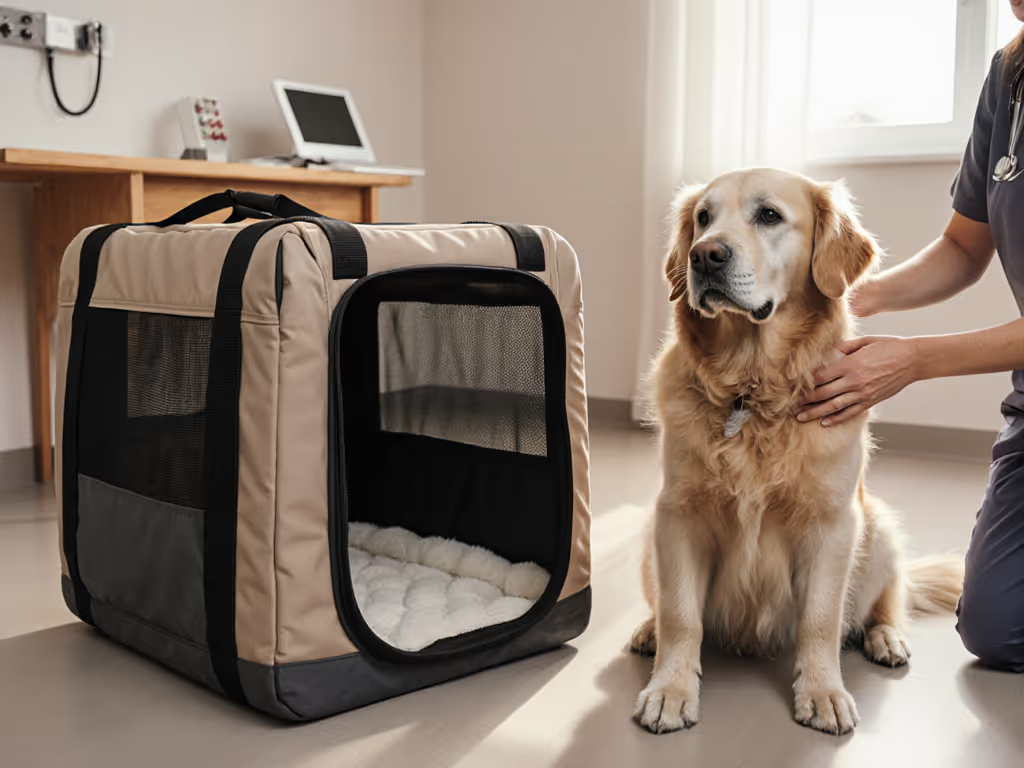
When your aging cat or dog faces a carrier ride (whether to the vet, across town, or to a new home), their joint health and cognitive state matter more than ever. Arthritis and dementia in senior pets demand very different support systems, and the right carrier becomes less about convenience and more about harm prevention. After watching older pets struggle in ill-fitting carriers, I've learned that choosing between a carrier for an arthritic pet versus one for a cognitively declining pet isn't a luxury decision; it's a compassionate one.
Research confirms that arthritis and cognitive decline are deeply connected in aging bodies. Studies show that rheumatoid arthritis is associated with poorer cognitive outcomes[1], and osteoarthritis increases dementia risk, especially Alzheimer's disease[2]. The inflammation that drives joint pain also compromises blood flow to vital organs, including the brain[9]. This isn't theoretical; it means a senior pet struggling with joint pain may also be experiencing confusion, disorientation, or anxiety that compounds carrier stress.
For pet parents, this linkage signals one urgent truth: comfort is capacity you actually use for miles. A carrier that ignores load distribution, posture support, or cognitive safety isn't just uncomfortable; it's actively accelerating decline in both body and mind.
When your senior pet has arthritis or joint disease, the carrier's job is to cradle weight and minimize repetitive impact. Here's what changes: For condition-specific recommendations, compare our arthritis-friendly pet carriers to find orthopedic support that truly reduces impact.
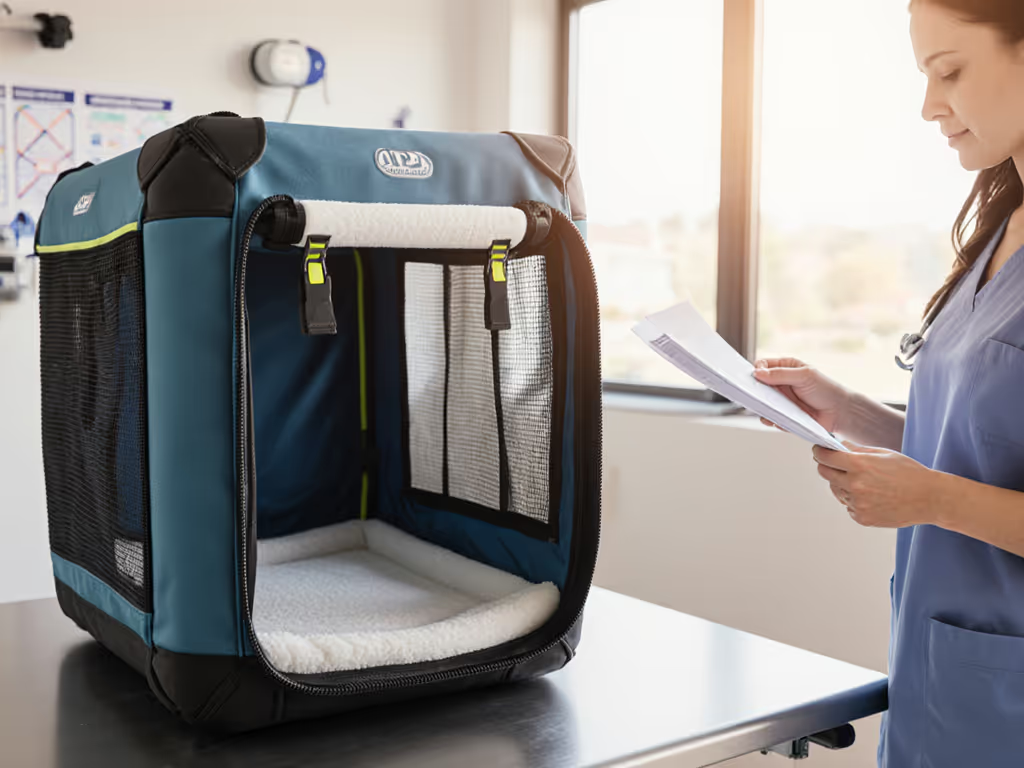
Rigid base with memory foam or orthopedic padding: Hard plastic floors with thin cushioning transfer every bump. An arthritic dog or cat curling into a hard corner loses hip extension; their joints compress. Look for 1-2 inches of graduated padding that molds to spine and hips without bottoming out.
Angled entry ramps or no-step access: Stairs into a carrier are joint killers. Your arthritic senior should enter horizontally, not climb. Carriers with side doors or top-hinged lids let your pet walk in level. If ramps aren't included, test the stairs (not just the carrier), and make sure you can angle one at no more than 20 degrees.
Sling or belly support (for small dogs under 15 lb): If your arthritic pet must ride in arms or over-shoulder, a padded sling distributes weight across your torso and hips, not your hands. This also prevents your pet from squirming and jarring their joints.
Width-to-length ratio: Arthritic pets need room to stretch and shift. A carrier 1.5× your pet's body length allows them to stand, turn, and lie down without compressing spine or knees. Cramped quarters force sphinx-pose, which locks lumbar discs.
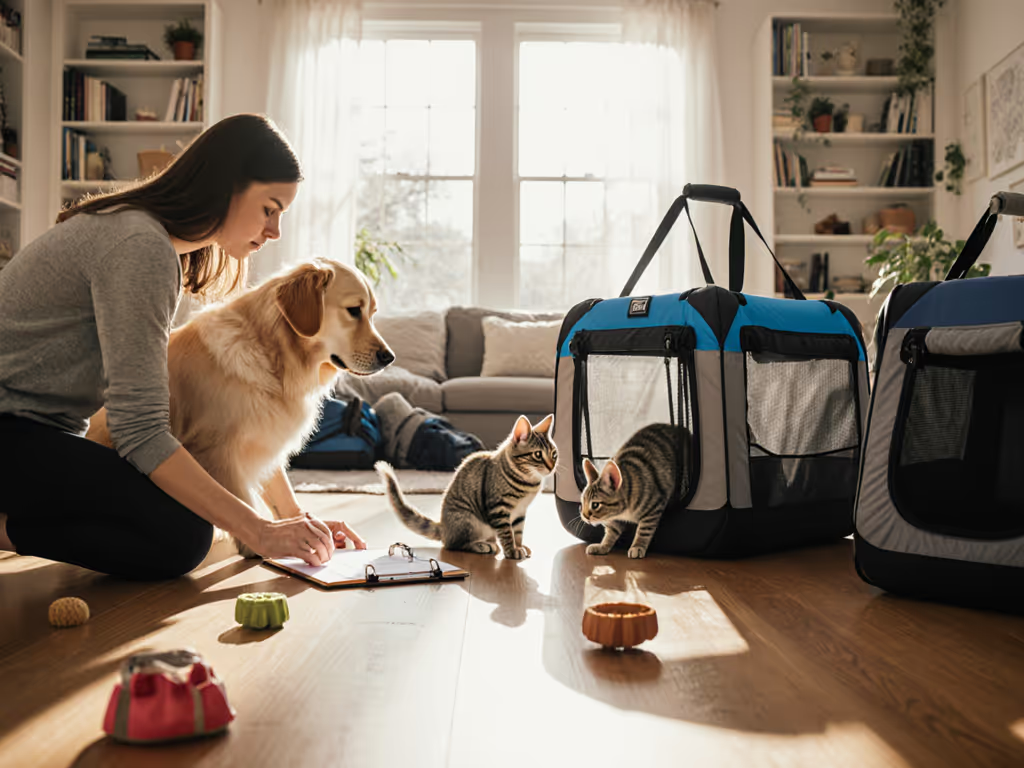
Test your pet in the carrier at home before travel. Watch their posture:
If your pet adopts stress posture, the carrier isn't right, no matter the brand or price.
Wheeled carriers (under 20 lb total) are gold for arthritic pets because they spare both pet and human impact. You roll, not carry. The downside: stairs, curbs, and cobblestones still jar the pet inside. Prioritize wheels with suspension or ball bearings, and test on your route (airport terminals, vet clinic stairs, your home entryway) before committing. Not sure when to roll versus carry? Our pet stroller vs carrier guide compares pros, cons, and ideal scenarios for senior pets.
Backpack carriers work only if you have strong shoulders and your arthritic pet is under 12 lb. The trade-off: your body absorbs shock, but your pet avoids the bump of rolling wheels. If you choose backpack for an arthritic pet, wear a padded hip belt to offload weight to your pelvis, not your spine. Hands tingling and neck protesting signals load-path failure. Adjust or switch modes.
Senior pets with cognitive dysfunction or dementia require a completely different carrier architecture. Their challenges aren't pain; they're confusion, disorientation, and sometimes panic in unfamiliar enclosed spaces.
Dementia can make bright, chaotic environments (busy streets, airports) terrifying. See design checklists in our sensory-friendly carrier guide to minimize visual and noise stress. A carrier with:
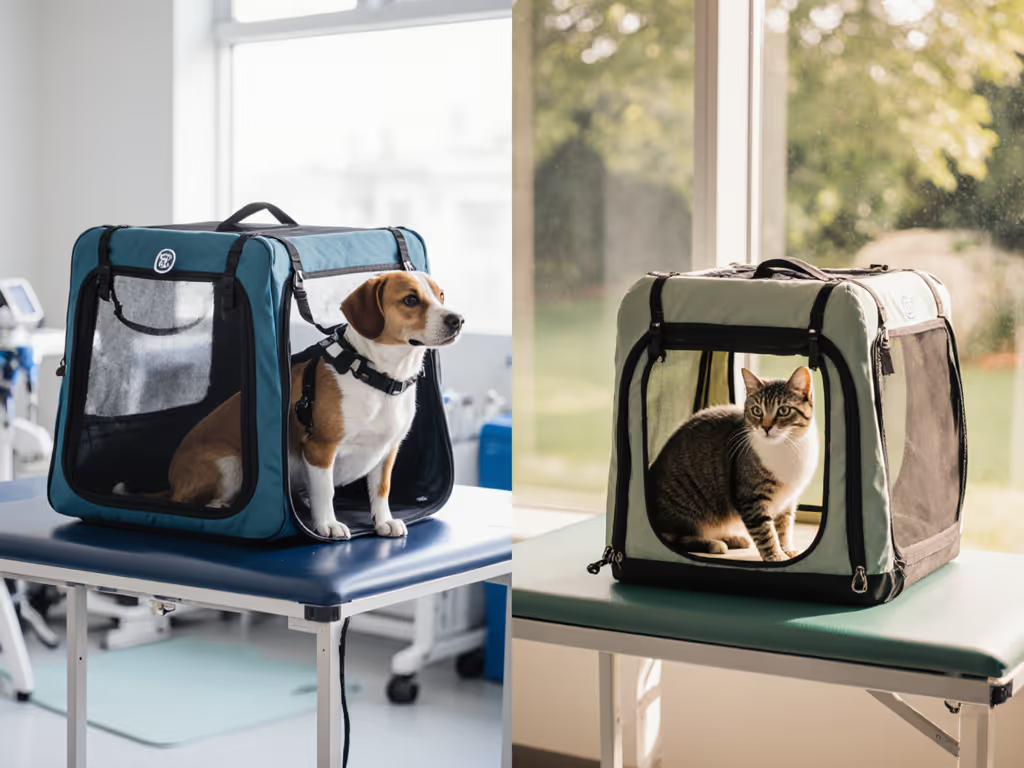
A confused senior pet may panic when forced into a small opening. Carriers with top-hinged lids and side doors let you lower your pet gently, horizontally, without herding them into a narrow portal. Dementia often includes spatial disorientation; a pet that can't visualize where the opening leads will resist and worsen their distress.
Cognitive decline often affects thermoregulation. Dementia patients sometimes can't tell you they're overheating or cold. Carriers with mesh on multiple sides (not just front) allow air circulation. In summer, consider a carrier with a reflective exterior or add a cooling insert. In winter, a removable fleece-lined pad maintains warmth without overheating risk.
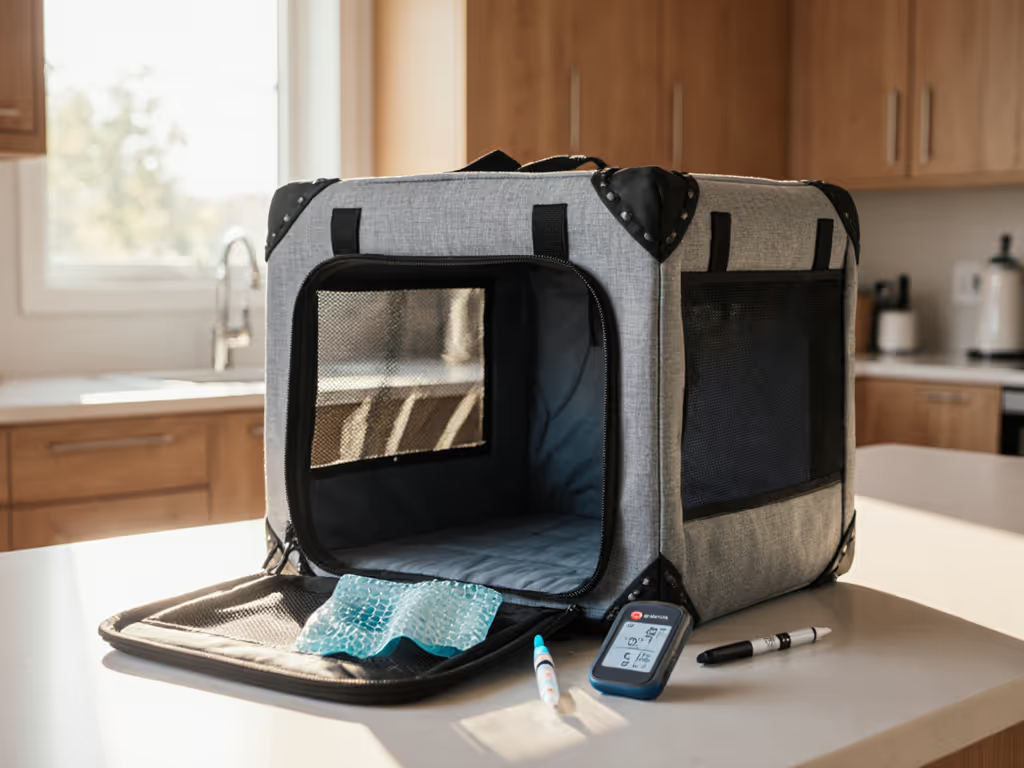
Place a blanket or item from your pet's regular bed inside the carrier. Dementia-affected pets rely on scent cues more than sight. A familiar smell reduces orientation panic and can lower stress enough to prevent accidents or aggression during transport.
| Feature | Arthritis Priority | Dementia Priority |
|---|---|---|
| Entry | Ramp or top-access; level entry | Top-access; large opening; no squeezing |
| Base padding | 1-2 inches orthopedic foam | Familiar bedding; washable liner |
| Ventilation | Adequate airflow | Multi-sided mesh; thermal control |
| Sound | Quiet zippers matter less | Quiet closures critical; no rattles |
| Visibility | Standard mesh okay | Privacy options; single-window preferred |
| Size | 1.5× body length; room to shift | Snug but not cramped; nesting possible |
| Closure type | Secure locks; escape-proof | Slow-release closures; no startle risk |
| Washing | Removable liner easy-clean | Removable, machine-washable liner |
Many senior pets have both. They need carriers that combine features: orthopedic padding (arthritis), privacy panels (dementia), ramp entry (arthritis), quiet zippers (dementia). This is where structured backpack carriers with adjustable dividers and removable inserts shine (one carrier, modular comfort).
If your senior has both conditions, prioritize entry method and padding first. A pet in pain won't stay calm; a confused pet in pain becomes dangerous (to themselves and your hands). Load-path support trumps privacy features when joints are failing.
Don't forget: your comfort is non-negotiable. Explore strap systems, handles, and wheel options in our ergonomic carrier design guide so your body lasts the whole trip. After a cross-town commute with a 16-pound cat in a shoulder tote, my hands tingled and my neck protested for days. The carrier wasn't wrong for the cat; it was wrong for me. Switching to a structured backpack with load lifters and a hip-belt changed everything. Flights, stairs, and transfers felt manageable.
For senior pets under 15 lb, use a padded hip-belt backpack rather than shoulder-only carriers. Hip belts transfer 60-70% of load to your pelvis and legs, sparing your cervical spine. For pets 15-20 lb, wheeled options are mandatory unless you have competitive-grade shoulder mobility.
Test your carrier loaded with a pet-weight sandbag over stairs, down curbs, and across uneven ground. If you're adjusting straps mid-trip or rubbing your neck, the carrier isn't working. Comfort is capacity you actually use for miles.
For arthritis-dominant seniors: Invest in a wheeled carrier with orthopedic padding and ramp or top entry. Budget USD 150-300. Your pet's joints and your shoulders will thank you for the load distribution.
For dementia-dominant seniors: Prioritize a carrier with privacy options, multi-sided ventilation, and quiet closures. Structured backpacks with modular inserts (USD 120-250) often outperform wheeled models here because you control pace and can pause without the carrier rolling or tipping.
For hybrid arthritic-dementia seniors: Look for a mid-sized (18-24 inch) structured backpack with a removable orthopedic pad, privacy cover, and quiet zippers. A good one runs USD 200-350 but replaces two single-purpose carriers.
Comfort isn't luxury; it's the difference between a pet who relaxes and one who deteriorates during transport. Your senior deserves a carrier matched to their body and mind, not just their weight. Test the stairs, not just the carrier, and your next trip will be manageable, not dreadful, for both of you.