Brewery Pet Carrier Comparison And Winery-Friendly Picks
17th May•13 min read
Choosing a pet temperament carrier guide means moving beyond generic size charts to understand how your cat's or dog's personality shapes the features that matter most. A behavioral pet carrier selection process starts with one simple truth: stress finds shortcuts, and those shortcuts exploit whatever material fails first under load. I've watched carriers fail during real travel (mesh laddering under panic claws, zippers skipping under sustained pulling, seams separating when a frightened animal thrashes against confinement). To understand why these weak points give way, see our carrier material science guide. The right fit begins with honest assessment of your pet's behavior, not wishful thinking about their compliance.
Temperament isn't a single trait (it's a pattern of responses to confinement, motion, and novelty). Start by observing three scenarios:
Unfamiliar spaces: Does your pet explore cautiously or immediately hide? Explorers tolerate open-design carriers; hiders need enclosed, low-visibility designs.
Handling and restraint: When held or held still, does your pet relax, resist passively, or struggle actively? Active resisters need reinforced mesh and lockable hardware; passive resisters benefit from sight lines to reduce anxiety.
Novel sensations: How does your pet respond to car vibration, airflow, or sudden stops? Motion-sensitive pets show panting, drooling, or vocalization: signs they need privacy, moisture barriers, and sealed ventilation (not maximum airflow). For car travel, follow our crash-tested carrier safety checklist to reduce vibration stress and secure the carrier correctly.
Don't rely on shelter descriptions or past vet visits. Spend 10 minutes watching your pet's body language in a neutral room: ears back, tail tucked, panting, or rigid posture all signal anxiety that will intensify under travel stress.
High-strung and dominant pets share one trait: they test boundaries under pressure. A zipped mesh panel isn't a boundary to them (it's a lock waiting to fail). Calm pet carrier features and escape-proof design diverge sharply here.
Zippers: Standard coil zippers skip teeth under sustained pulling. Reverse-coil zippers with reinforced bar-tacks (heavy stitching across seams) resist this. Test by running the zipper with firm, steady pressure. If it catches or hesitates, it will fail under a panicked animal's repeated yanking. Avoid single-track sliders; dual-track zippers distribute load better.
Mesh panels: Standard mesh ladders (tears propagate in one direction) when claws catch and pull. High-denier polyester or nylon-reinforced mesh resists puncturing longer, but even premium mesh eventually fails. The real safeguard is redundancy: mesh panels supported by internal frame struts so a single torn panel doesn't create an escape route. Inspect seam tape peeling; if the tape separates from the mesh, the panel's structural integrity is compromised.
Lockable hardware: Hasps, snap-latches, or cable ties over standard zippers add a psychological and physical barrier. Many escape artists simply won't test a carrier they can see is doubly locked; fear compels compliance more reliably than a single flimsy closure.
Rigid frame corners: Injection-molded or welded frame joints distribute torsional stress across larger contact areas. Carriers with glued or stitched frame seams fail catastrophically under sustained side pressure (precisely what a panicked animal applies).
Anxious pet travel solutions focus on reducing sensory overload and preventing panic escalation. The irony is that maximum ventilation (often recommended in generic guides) can worsen anxiety in sensitive animals. A pet that sees passing vehicles, hears crowd noise, or feels air pressure changes often panics faster, not slower.
Privacy and sight reduction: Soft-sided carriers with blackout panels or opaque fabric reduce visual stimuli. Hard-sided carriers with top-loading (allowing your pet to settle before doors close) create a sense of control. Mesh windows should have slide-open/slide-close covers so your pet chooses whether to observe or retreat into privacy.
Moisture control: Anxious pets drool and sweat. Carriers with removable, machine-washable liners prevent moisture from pooling, which triggers further panic and creates odor-retention issues. Look for moisture-barrier layers beneath fabric liners: polyurethane or rubberized backing that doesn't absorb liquid.
Ventilation design: Controlled, lateral ventilation (side panels with airflow but not direct view) provides oxygen without sensory flooding. Avoid front-facing mesh-only panels; prioritize carriers with vents positioned high and to the sides so air reaches your pet without overwhelming visual input.
Acoustic dampening: Velcro closures, jingling tags, and squeaky zippers startle anxious animals. Carriers with silent, smooth zippers and nylon closures reduce noise triggers. For deeper design advice on sound control, read our noise-reduction carriers guide.
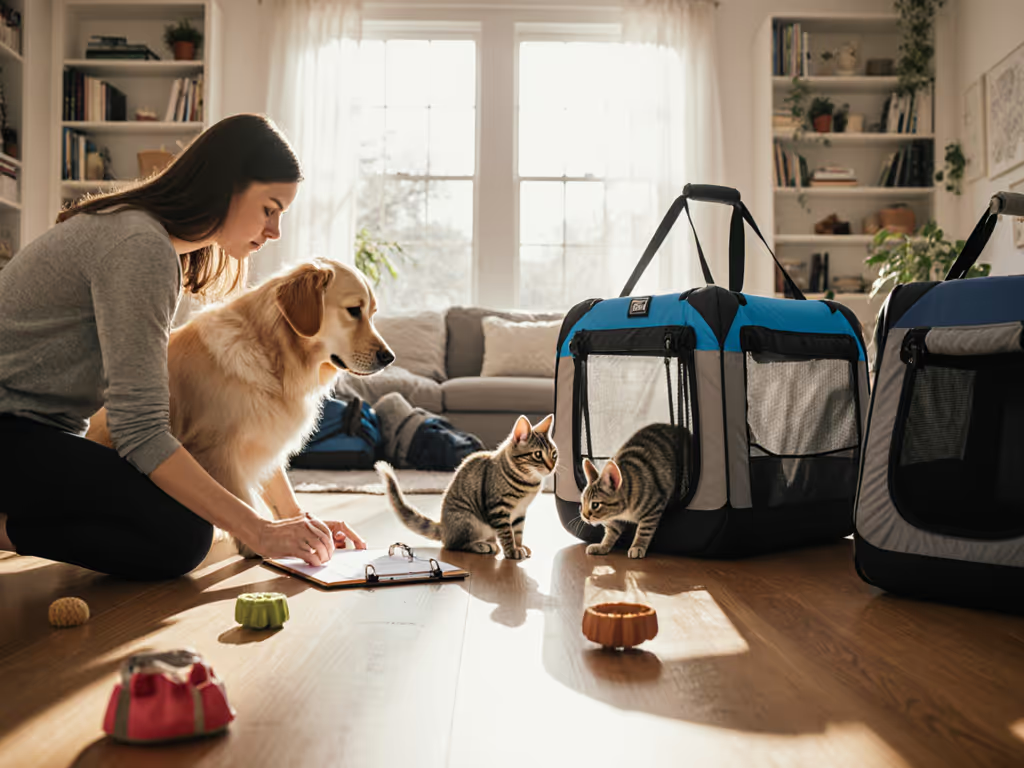
Proper behavioral pet carrier selection includes a staged testing protocol. Skipping this step is how owners end up with non-compliant carriers or traumatized pets mid-journey. For step-by-step acclimation methods, use our carrier introduction guide.
Week 1 - Familiarity: Place the carrier open in your pet's living space for 3-5 days. Add a worn blanket or toy with your scent. Record how often your pet enters voluntarily and how long they stay.
Week 2 - Threshold testing: Feed treats just inside the entrance, then gradually deeper into the carrier over 5-7 days. Close the door for 5-10 seconds while your pet eats, then open immediately. Never force confinement.
Week 3 - Stationary confinement: Close the door with your pet inside for 15-30 minutes while you remain nearby. Watch for panic signs: incessant panting, vocalization, or attempts to escape. If these emerge, this carrier design isn't a match (the failure is predictable under travel stress).
Week 4 - Motion and travel: Short, gentle car rides (under 10 minutes, no highway vibration). Extend distance and duration over several days. If your pet vocalizes, pants, or refuses to exit, motion sensitivity is severe; consult a veterinary behaviorist about pheromone treatments or anti-anxiety medication before committing to long trips.
Hard-sided carriers (rigid plastic or composite) excel for anxious or escape-prone pets. Seams are welded or integrated into structure rather than stitched, so they don't separate under load. The sealed shell provides privacy and reduces visual overstimulation. Top-loading design (opening from above) allows gentle, non-confrontational loading even for resistant animals. Ventilation is controlled, not exposed. Trade-off: they're heavy, less portable for longer walks, and take up storage space. For a full breakdown of use cases, compare soft vs hard carriers.
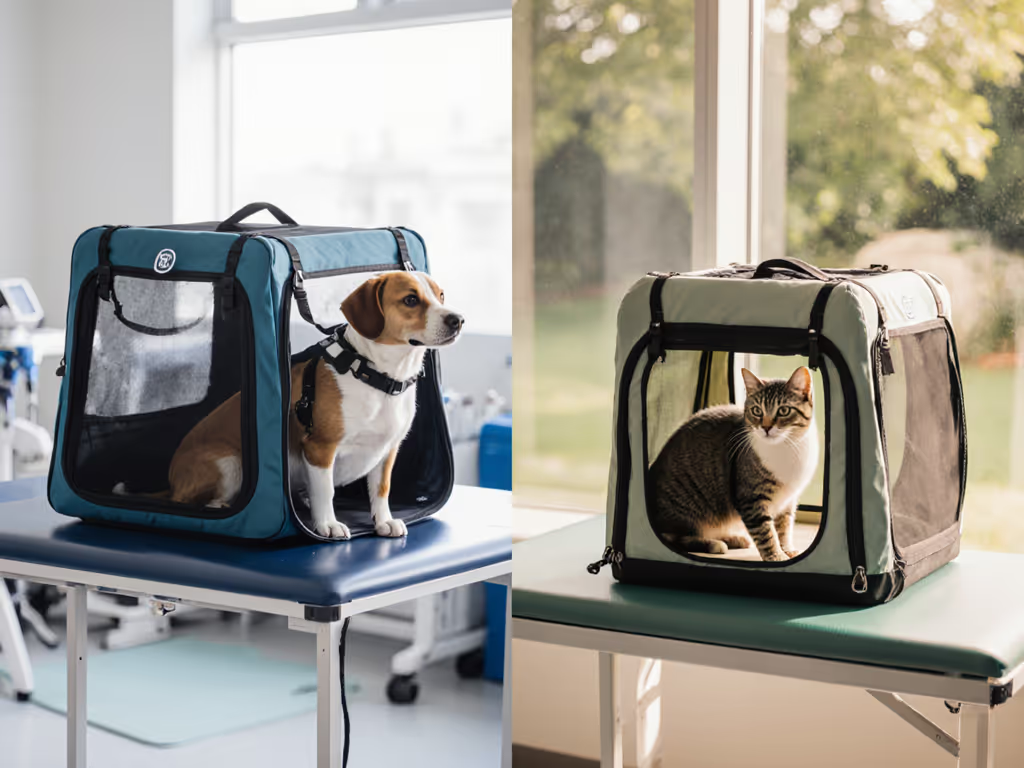
Soft-sided carriers (fabric over aluminum frames) suit calm, exploratory, or mildly anxious pets. They're lightweight, portable, and compress for travel. Front or side-loading makes quick access easy. However, seams are sewn, and they fail under sustained pressure (I've observed mesh panels separating from fabric bodies after claws catch repeatedly). They also allow more visual stimuli and require diligent zipper maintenance. If your pet is even moderately anxious or an escape tester, a soft-sided carrier will likely fail you mid-trip.
Size isn't just comfort (it's a behavioral control variable). A carrier that's too large gives a nervous animal space to shift anxiously, escalating panic. A carrier that's appropriately snug (allowing your pet to stand, turn, and lie down, but not pace) creates psychological security. Conversely, a carrier that's too small restricts movement painfully and triggers aggression or panic regardless of your pet's baseline temperament.
Measure accurately: Length from nose tip to tail root. Height from floor to top of ears (not stretched). Weight, dry and baseline. Then consult carrier dimensions and choose one where your pet occupies 70-75% of the floor footprint with about 2-3 inches of vertical headroom. This sweet spot balances security and comfort for most temperament profiles.
A pet personality carrier matching strategy removes guesswork and returns. Assess whether your pet is anxious, dominant, exploratory, or calm (not via breed stereotypes but through direct observation of behavior under confinement and motion). Anxious pets thrive in hard-sided, top-loading carriers with privacy features and controlled ventilation. Escape-prone or dominant pets need reinforced zippers (reverse-coil with bar-tacks), redundant locking, and high-denier mesh backed by rigid frame support. Calm, exploratory pets tolerate soft-sided carriers but still deserve quality hardware because stress finds shortcuts, and weak points fail where stress naturally travels first (at zippers, seams, and mesh).
Before purchase, run a four-week acclimation test at home. Watch for panic escalation under motion. Test hardware rigorously: run zippers under load, inspect seam tape for peeling, press mesh for resistance. Choose a carrier design, not just a size. Match the feature set to your pet's true temperament, not what you hope it will be. The strongest carrier for your situation isn't the most padded or the cheapest (it's the one whose materials and seams prove robust under the specific stresses your pet will apply during real travel).